
2-[(4,4,5,5,6,6,7,7,8,8,9,9,9-Tridecafluoro-1,1-dimethylnonyloxy) carbonyloxyimino]-2-phenylacetonitrile
2-[(4,4,5,5,6,6,7,7,8,8,9,9,9-Tridecafluoro-1,1-dimethylnonyloxy)carbonyloxyimino]-2-phenylacetonitrile (CAS 892154-76-6) is a fluorinated organic compound with the molecular formula C20H15F13N2O3 and a molecular weight of 578.32 g/mol. Its structure incorporates a perfluorinated nonyl chain, making it suitable for applications in fluorous synthesis and as a specialty reagent for chemical modification. This compound is valuable in research and development settings for specialized synthetic routes.
- IUPAC
- 2-[(1,1-Dimethyl-1H,1H,2H,2H,3H,3H-perfluorononyloxy)carbonyloxyimino]-2-phenylacetonitrile,2-[2-(1H,1H,2H,2H-Perfluorooctyl)isopropoxycarbonyloxyimino]-2-phenylacetonitrile
- Synonyms
- 5,6,6,7,7,8,8,9,9,9-Tridecafluoro-1,1-dimethylnonyloxy) carbonyloxyimino]-2-phenylacetonitrile,892154-76-6, C20H15F13N2O3, 2-[(1,1-Dimethyl-1H,1H,2H,2H,3H,3H-perfluorononyloxy)carbonyloxyimino]-2-phenylacetonitrile, 2-[2-(1H,1H,2H,2H-Perfluorooctyl)isopropoxycarbonyloxyimino]-2-phenylacetonitrile
![2-[(4,4,5,5,6,6,7,7,8,8,9,9,9-Tridecafluoro-1,1-dimethylnonyloxy) carbonyloxyimino]-2-phenylacetonitrile (C20H15F13N2O3) — chemical structure, CAS 892154-76-6; Chemistry, fine chemical supplied by Tech Serve Solutions](/_next/image?url=https%3A%2F%2Fpub-f4d920c906024441a773a96f7098e551.r2.dev%2Fimages%2Fproducts%2F892154-76-6.png&w=3840&q=75)
Fluorous Synthesis
This compound serves as a key reagent in fluorous synthesis, a technique that leverages the unique properties of highly fluorinated compounds for separation and purification. Its fluorous tag facilitates easy removal from reaction mixtures.
Specialty Chemical Synthesis
It is employed as a building block or modifying agent in specialty chemical synthesis, enabling the introduction of fluorinated moieties into target molecules for specific property tuning.
Research and Development
This chemical is utilised in research laboratories for exploring novel synthetic pathways and developing new materials or pharmaceutical intermediates where fluorination is a critical component.
Rf-Tagged Protecting Groups
The compound can function as an Rf-tagged protecting group, simplifying the manipulation and isolation of intermediates in multi-step organic synthesis.
| Molecular weight | 578.32 |
|---|---|
| Empirical formula | C20H15F13N2O3 |
| Assay | ≥95% (NMR) |

Hazard statements
- H302Harmful if swallowed
- H312Harmful in contact with skin
- H332Harmful if inhaled
Precautionary statements
- P280Wear protective gloves, clothing and eye/face protection
| Protective equipment | dust mask type N95 (US), Eyeshields, Gloves |
|---|---|
| Water hazard class (WGK, DE) | 3 |
| Hazard codes (EU) | Xn |
| Risk statements (R) | 20/21/22 |
| Safety statements (S) | 36/37 |
Hazard information is provided for guidance. Always consult the product Safety Data Sheet (SDS), available on request, before handling.
Documentation
Every batch ships with a Certificate of Analysis covering assay, identity and purity; the grade is confirmed against your enquiry. Safety Data Sheets and technical data sheets are available on request.
Supply & logistics
Samples for technical evaluation; bulk MOQ by grade and packaging. In-stock material ships in 7–10 working days, worldwide, with full export documentation.
What is 2-[(4,4,5,5,6,6,7,7,8,8,9,9,9-Tridecafluoro-1,1-dimethylnonyloxy)carbonyloxyimino]-2-phenylacetonitrile used for?
+
This compound is used in fluorous synthesis, specialty chemical synthesis, and research and development for introducing fluorinated moieties and as an Rf-tagged protecting group.
What is the CAS number and molecular formula?
+
The CAS number is 892154-76-6 and the molecular formula is C20H15F13N2O3.
What grade and purity does Tech Serve Solutions supply?
+
Tech Serve Solutions supplies this compound with an assay of ≥95% (NMR). We do not represent it as USP, BP, EP, or other pharmacopoeia grades.
What are the safety considerations when handling this chemical?
+
This compound is classified with a Warning signal word. It is harmful if swallowed (H302), harmful in contact with skin (H312), and harmful if inhaled (H332). Appropriate personal protective equipment, including a dust mask (type N95 or equivalent), eyeshields, and gloves, must be worn. Handle in a well-ventilated area.
Is this chemical available for export?
+
Yes, Tech Serve Solutions is a global supplier and exporter of fine chemicals, including this product, and can fulfil international orders.
How can I request a quote or sample?
+
To request a quote or sample, please use the contact form on our website or call our sales department directly. Please reference the product name and CAS number.
▶ Related products
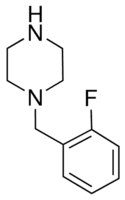
1-(2-Fluorobenzyl)piperazine
C11H15FN2
Chemical Synthesis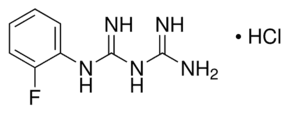
1-(2-Fluorophenyl)biguanide hydrochloride
Chemical Synthesis
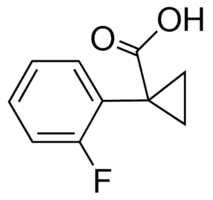
1-(2-Fluorophenyl)cyclopropanecarboxylic acid
C10H9FO2
Chemical Synthesis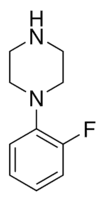
1-(2-Fluorophenyl)piperazine
C10H13FN2
Chemical Synthesis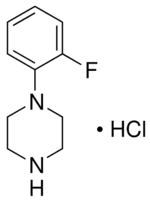
1-(2-Fluorophenyl)piperazine monohydrochloride
C10H13FN2 · HCl
Chemical Synthesis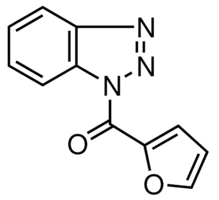
1-(2-Furoyl)-1H-benzotriazole
C11H7N3O2
Chemical Synthesis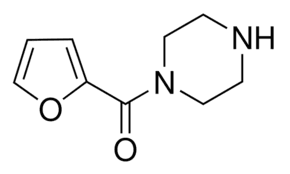
1-(2-Furoyl)piperazine
C9H12N2O2
Chemical Synthesis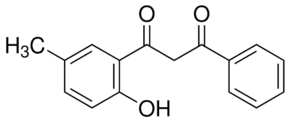
1-(2-Hydroxy-5-methylphenyl)-3-phenyl-1,3-propanedione
Chemical Synthesis
▶ Explore more

Bis(cyclopentadienyl)cobalt(III) hexafluorophosphate
C10H10CoF6P
Catalysis & Inorganic
1-(4-Chlorophenyl)biguanide hydrochloride
ClC6H4NHC(NH)NHC(NH)NH2 · HCl
Chemical Synthesis
Bis(cyclopentadienyl)dimethylzirconium(IV)
Catalysis & Inorganic

1-(4-Chlorophenyl)ethanol
ClC6H4CH(CH3)OH
Chemical Synthesis