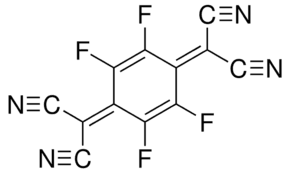
2,3,5,6-Tetrafluoro-7,7,8,8-tetracyanoquinodimethane
2,3,5,6-Tetrafluoro-7,7,8,8-tetracyanoquinodimethane (CAS: 29261-33-4; Formula: C12F4N4) is a highly fluorinated organic compound with a molecular weight of 276.15 g/mol. Known for its electron-accepting properties, it is extensively utilised in advanced materials science, particularly in organic electronics. This compound serves as a critical component in the development of organic field-effect transistors (OFETs) and as a hole injection layer (HIL) material in organic light-emitting diodes (OLEDs) and polymer light-emitting diodes (PLEDs).
- IUPAC
- (2,3,5,6-Tetrafluoro-2,5-cyclohexadiene-1,4-diylidene)dimalononitrile,7,7,8,8-Tetracyano-2,3,5,6-tetrafluoroquinodimethane,F4TCNQ
- Synonyms
- 6-Tetrafluoro-7,7,8,8-tetracyanoquinodimethaneC12F4N4(2,3,5,6-Tetrafluoro-2,5-cyclohexadiene-1,4-diylidene)dimalononitrile7,7,8,8-Tetracyano-2,3,5,6-tetrafluoroquinodimethaneF4TCNQ
Organic Electronics
Utilised as a key material in organic field-effect transistors (OFETs), contributing to the development of flexible and printable electronic devices. Its properties are crucial for achieving efficient charge transport in organic semiconductor layers.
OLED and PLED Technology
Functions as a Hole Injection Layer (HIL) material in Organic Light-Emitting Diodes (OLEDs) and Polymer Light-Emitting Diodes (PLEDs). It facilitates the efficient injection of holes from the anode into the organic emissive layer, enhancing device performance and longevity.
Non-Linear Optical (NLO) Materials
Serves as an intermediate or component in the synthesis of Non-Linear Optical (NLO) materials. Its electron-deficient structure is beneficial for creating chromophores with significant NLO properties for photonic applications.
Materials Science Research
Applied in fundamental materials science research due to its unique electronic and optical characteristics. It is investigated for potential uses in areas such as organic photovoltaics and advanced sensor technologies.
| Molecular weight | 276.15 |
|---|---|
| Empirical formula | C12F4N4 |
| Assay | 97% |
| Melting point | 285-290 °C(lit.) |

Hazard statements
- H301Toxic if swallowed
- H311Toxic in contact with skin
- H331Toxic if inhaled
Precautionary statements
- P261Avoid breathing dust, fume, gas or vapours
- P280Wear protective gloves, clothing and eye/face protection
- P301IF SWALLOWED
- P311Call a POISON CENTER or doctor
| Protective equipment | Eyeshields, Faceshields, Gloves, type P2 (EN 143) respirator cartridges |
|---|---|
| Transport (UN / ADR) | UN 3439 6.1/PG 3 |
| Water hazard class (WGK, DE) | 3 |
| Hazard codes (EU) | T |
| Risk statements (R) | 23/24/25 |
| Safety statements (S) | 22-24/25-36/37 |
Hazard information is provided for guidance. Always consult the product Safety Data Sheet (SDS), available on request, before handling.
Documentation
Every batch ships with a Certificate of Analysis covering assay, identity and purity; the grade is confirmed against your enquiry. Safety Data Sheets and technical data sheets are available on request.
Supply & logistics
Samples for technical evaluation; bulk MOQ by grade and packaging. In-stock material ships in 7–10 working days, worldwide, with full export documentation.
What is 2,3,5,6-Tetrafluoro-7,7,8,8-tetracyanoquinodimethane used for?
+
This compound is primarily used in organic electronics as a Hole Injection Layer (HIL) material for OLEDs and PLEDs, and in Organic Field-Effect Transistors (OFETs). It is also utilised in Materials Science and for Non-Linear Optical (NLO) applications.
What is the CAS number and molecular formula for 2,3,5,6-Tetrafluoro-7,7,8,8-tetracyanoquinodimethane?
+
The CAS number is 29261-33-4 and the empirical formula (Hill notation) is C12F4N4.
What grade and purity does Tech Serve Solutions supply?
+
Tech Serve Solutions supplies this chemical with an assay of 97%. TSS does not represent this product as USP, BP, EP, or any pharmacopoeia grade.
What are the safety considerations for handling this chemical?
+
This compound is classified as Danger, with hazards including acute toxicity (oral, dermal, inhalation: H301, H311, H331). Appropriate personal protective equipment, including eyeshields, faceshields, gloves, and P2 respirator cartridges, must be used. Handle with extreme care to avoid exposure.
How is this chemical packed, shipped, and exported?
+
This chemical is packed and shipped according to international regulations for hazardous materials, including UN 3439 classification (Class 6.1, Packing Group III). Tech Serve Solutions is a specialist global supplier and exporter.
How can I request a quote or sample?
+
To request a quote or sample, please contact our sales department through the website or by phone, providing the product name and CAS number (29261-33-4).
▶ Related products
Poly(3-hexylthiophene-2,5-diyl)
Organic & Printed Electronics
![[6,6]-Phenyl C71 butyric acid methyl ester, mixture of isomers — chemical structure, CAS 609771-63-3; Organic & Printed Electronics, fine chemical supplied by Tech Serve Solutions](/_next/image?url=https%3A%2F%2Fpub-f4d920c906024441a773a96f7098e551.r2.dev%2Fimages%2Fproducts%2F609771-63-3.png&w=3840&q=75)
[6,6]-Phenyl C71 butyric acid methyl ester, mixture of isomers
Organic & Printed Electronics
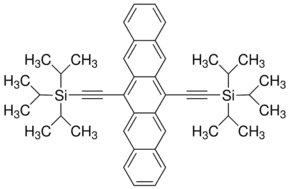
6,13-Bis(triisopropylsilylethynyl)pentacene
Organic & Printed Electronics
![[6,6]-Phenyl C61 butyric acid methyl ester — chemical structure, CAS 160848-22-6; Organic & Printed Electronics, fine chemical supplied by Tech Serve Solutions](/_next/image?url=https%3A%2F%2Fpub-f4d920c906024441a773a96f7098e551.r2.dev%2Fimages%2Fproducts%2F160848-22-6.png&w=3840&q=75)
[6,6]-Phenyl C61 butyric acid methyl ester
Organic & Printed Electronics
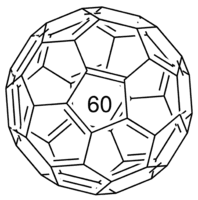
Fullerene-C60
C60
Organic & Printed Electronics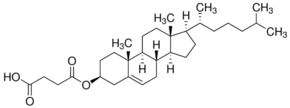
Cholesteryl hemisuccinate
C31H50O4
Organic & Printed Electronics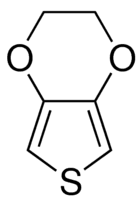
3,4-Ethylenedioxythiophene
Organic & Printed Electronics
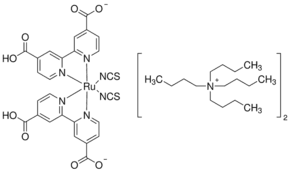
Di-tetrabutylammonium cis-bis(isothiocyanato)bis(2,2′-bipyridyl-4,4′-dicarboxylato)ruthenium(II)
Organic & Printed Electronics