
2,2′,7,7′-Tetrakis(N,N-diphenylamino)-9,9-spirobifluorene
2,2′,7,7′-Tetrakis(N,N-diphenylamino)-9,9-spirobifluorene (CAS: 189363-47-1), with the empirical formula C73H52N4 and a molecular weight of 985.22 g/mol, is a high-performance organic semiconductor. Its unique spirobifluorene structure provides excellent thermal stability for amorphous states. It is primarily utilised as a phosphorescent host material and hole transport material in advanced electronic devices, particularly within the field of organic light-emitting diodes (OLEDs).
- IUPAC
- N2,N2,N2′,N2′,N7,N7,N7′,N7′-octaphenyl-9,9′-spirobi[9H-fluorene]-2,2′,7,7′-tetramine,Spiro-TAD
- Synonyms
- 7′-Tetrakis(N,N-diphenylamino)-9,9-spirobifluoreneSpiro-TADN2,N2,N2′,N2′,N7,N7,N7′,N7′-octaphenyl-9,9′-spirobi[9H-fluorene]-2,2′,7,7′-tetramine

Phosphorescent Host Material
This compound serves as a highly effective host material for phosphorescent emitters in OLED devices. Its molecular design facilitates efficient energy transfer and charge transport, crucial for device performance and longevity.
Hole Transport Material (HTM)
Possessing excellent hole mobility and thermal stability due to its spiro structure, it functions as a reliable hole transport layer in organic electronic devices, contributing to balanced charge injection and transport.
Organic Electronics
It is a key component in the development and fabrication of various organic electronic devices, including but not limited to OLEDs and PLEDs, where its semiconductor properties are leveraged.
Materials Science Research
Utilised extensively in materials science research for developing next-generation organic semiconductors and optoelectronic components, owing to its unique spiro structure and charge transport capabilities.
| Molecular weight | 985.22 |
|---|---|
| Empirical formula | C73H52N4 |
| Assay | 99% (HPLC) |
| Application | Hole transport materials comprised of a spiro center between two charge transport material (CTM) moieties. This molecular conformation improves the thermal stability of the amorphous state, without significantly altering the charge-transport properties1. |
| Melting point | 275-280 °C |
| Absorption | absorption 378 μm in THF |
|---|
Documentation
Every batch ships with a Certificate of Analysis covering assay, identity and purity; the grade is confirmed against your enquiry. Safety Data Sheets and technical data sheets are available on request.
Supply & logistics
Samples for technical evaluation; bulk MOQ by grade and packaging. In-stock material ships in 7–10 working days, worldwide, with full export documentation.
What is 2,2′,7,7′-Tetrakis(N,N-diphenylamino)-9,9-spirobifluorene used for?
+
This compound is primarily used as a phosphorescent host material and a hole transport material in organic electronic devices, such as OLEDs and PLEDs, and is also employed in materials science research.
What are the CAS number and molecular formula for this compound?
+
The CAS number is 189363-47-1 and the empirical formula is C73H52N4.
What grade and purity does Tech Serve Solutions supply?
+
Tech Serve Solutions supplies 2,2′,7,7′-Tetrakis(N,N-diphenylamino)-9,9-spirobifluorene with a purity of 99% (HPLC). TSS does not represent this product as USP, BP, or EP grade.
What are the safety considerations when handling this chemical?
+
This chemical is classified under WGK 3 in Germany, indicating a high hazard level. Appropriate personal protective equipment should be used, and handling should occur in well-ventilated areas to avoid exposure.
How is this chemical packed, shipped, and exported by TSS?
+
Tech Serve Solutions, as a specialist global supplier and exporter since 1998, ensures products are packed securely for international shipment, adhering to all relevant transport regulations for fine chemicals.
How can I request a quote or sample for this product?
+
To request a quote or a sample of 2,2′,7,7′-Tetrakis(N,N-diphenylamino)-9,9-spirobifluorene, please contact our sales team via the website or directly with your requirements.
▶ Related products
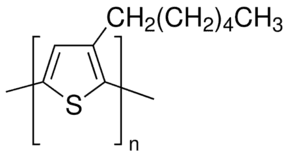
Poly(3-hexylthiophene-2,5-diyl)
Organic & Printed Electronics
![[6,6]-Phenyl C71 butyric acid methyl ester, mixture of isomers — chemical structure, CAS 609771-63-3; Organic & Printed Electronics, fine chemical supplied by Tech Serve Solutions](/_next/image?url=https%3A%2F%2Fpub-f4d920c906024441a773a96f7098e551.r2.dev%2Fimages%2Fproducts%2F609771-63-3.png&w=3840&q=75)
[6,6]-Phenyl C71 butyric acid methyl ester, mixture of isomers
Organic & Printed Electronics
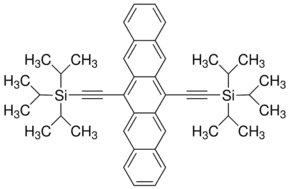
6,13-Bis(triisopropylsilylethynyl)pentacene
Organic & Printed Electronics
![[6,6]-Phenyl C61 butyric acid methyl ester — chemical structure, CAS 160848-22-6; Organic & Printed Electronics, fine chemical supplied by Tech Serve Solutions](/_next/image?url=https%3A%2F%2Fpub-f4d920c906024441a773a96f7098e551.r2.dev%2Fimages%2Fproducts%2F160848-22-6.png&w=3840&q=75)
[6,6]-Phenyl C61 butyric acid methyl ester
Organic & Printed Electronics
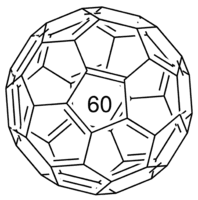
Fullerene-C60
C60
Organic & Printed Electronics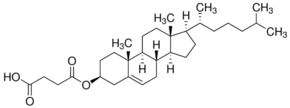
Cholesteryl hemisuccinate
C31H50O4
Organic & Printed Electronics
3,4-Ethylenedioxythiophene
Organic & Printed Electronics
Di-tetrabutylammonium cis-bis(isothiocyanato)bis(2,2′-bipyridyl-4,4′-dicarboxylato)ruthenium(II)
Organic & Printed Electronics
▶ Explore more

Bis(cyclopentadienyl)cobalt(III) hexafluorophosphate
C10H10CoF6P
Catalysis & Inorganic
1-(4-Chlorophenyl)biguanide hydrochloride
ClC6H4NHC(NH)NHC(NH)NH2 · HCl
Chemical Synthesis
Bis(cyclopentadienyl)dimethylzirconium(IV)
Catalysis & Inorganic

1-(4-Chlorophenyl)ethanol
ClC6H4CH(CH3)OH
Chemical Synthesis