
2,2,2-Triphenylacetophenone
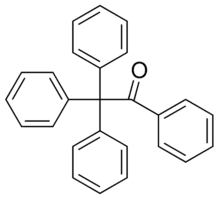
2,2,2-Triphenylacetophenone (CAS 466-37-5) is an organic compound with the linear formula (C₆H₅)₃CCOC₆H₅ and a molecular weight of 348.44 g/mol. This ketone serves as a valuable building block in chemical synthesis, particularly within the realms of organic chemistry and materials science. Its unique structure makes it a useful intermediate for the preparation of more complex molecules.
- IUPAC
- Benzopinacolone,Phenyl trityl ketone
- Synonyms
- 466-37-5, (C6H5)3CCOC6H5, Benzopinacolone, Phenyl trityl ketone
Organic Synthesis Intermediate
2,2,2-Triphenylacetophenone is employed as a key intermediate in multi-step organic syntheses. Its reactive carbonyl group and bulky phenyl substituents allow for diverse chemical transformations.
Research and Development
This compound is utilised in academic and industrial R&D settings for exploring novel reaction pathways and developing new chemical entities with potential applications in various fields.
Building Block for Specialty Chemicals
It functions as a foundational component in the construction of more elaborate organic structures, contributing to the synthesis of specialty chemicals and materials.
| Molecular weight | 348.44 |
|---|---|
| Linear formula | (C6H5)3CCOC6H5 |
| Assay | 98% |
| Melting point | 182-184 °C(lit.) |
| Protective equipment | Eyeshields, Gloves, type N95 (US), type P1 (EN143) respirator filter |
|---|---|
| Water hazard class (WGK, DE) | 3 |
Hazard information is provided for guidance. Always consult the product Safety Data Sheet (SDS), available on request, before handling.
Documentation
Every batch ships with a Certificate of Analysis covering assay, identity and purity; the grade is confirmed against your enquiry. Safety Data Sheets and technical data sheets are available on request.
Supply & logistics
Samples for technical evaluation; bulk MOQ by grade and packaging. In-stock material ships in 7–10 working days, worldwide, with full export documentation.
What is 2,2,2-Triphenylacetophenone used for?
+
2,2,2-Triphenylacetophenone is primarily used as a building block and intermediate in organic synthesis and in research and development for creating new chemical entities.
What are the CAS number and formula for 2,2,2-Triphenylacetophenone?
+
The CAS number is 466-37-5 and the linear formula is (C₆H₅)₃CCOC₆H₅.
What grade and purity does Tech Serve Solutions supply?
+
Tech Serve Solutions supplies 2,2,2-Triphenylacetophenone with an assay of 98%. We do not represent this product as USP, BP, or EP grade.
How should 2,2,2-Triphenylacetophenone be handled safely?
+
Handle 2,2,2-Triphenylacetophenone with appropriate personal protective equipment, including eyeshields and gloves. A type N95 (US) or type P1 (EN143) respirator filter is recommended. It is classified under WGK 3 in Germany, indicating a significant hazard to water.
How is 2,2,2-Triphenylacetophenone packed and shipped?
+
2,2,2-Triphenylacetophenone is carefully packed according to industry standards to ensure safe transit and is available for export globally by Tech Serve Solutions.
How can I request a quote or sample for 2,2,2-Triphenylacetophenone?
+
To request a quote or sample, please contact our sales team through the website or by phone. We will be pleased to assist you.
▶ Related products
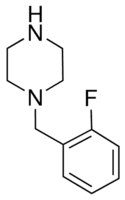
1-(2-Fluorobenzyl)piperazine
C11H15FN2
Chemical Synthesis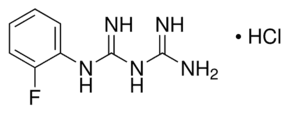
1-(2-Fluorophenyl)biguanide hydrochloride
Chemical Synthesis
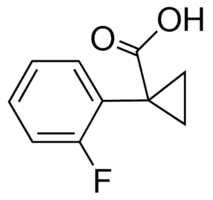
1-(2-Fluorophenyl)cyclopropanecarboxylic acid
C10H9FO2
Chemical Synthesis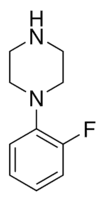
1-(2-Fluorophenyl)piperazine
C10H13FN2
Chemical Synthesis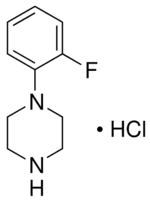
1-(2-Fluorophenyl)piperazine monohydrochloride
C10H13FN2 · HCl
Chemical Synthesis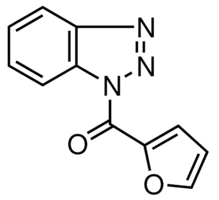
1-(2-Furoyl)-1H-benzotriazole
C11H7N3O2
Chemical Synthesis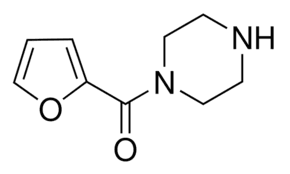
1-(2-Furoyl)piperazine
C9H12N2O2
Chemical Synthesis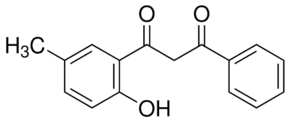
1-(2-Hydroxy-5-methylphenyl)-3-phenyl-1,3-propanedione
Chemical Synthesis
▶ Explore more

Bis(cyclopentadienyl)cobalt(III) hexafluorophosphate
C10H10CoF6P
Catalysis & Inorganic
1-(4-Chlorophenyl)biguanide hydrochloride
ClC6H4NHC(NH)NHC(NH)NH2 · HCl
Chemical Synthesis
Bis(cyclopentadienyl)dimethylzirconium(IV)
Catalysis & Inorganic

1-(4-Chlorophenyl)ethanol
ClC6H4CH(CH3)OH
Chemical Synthesis