
2-(1,3-Dioxolan-2-yl)]ethyl]zinc bromide solution
2-\[1,3-Dioxolan-2-yl\]ethyl\]zinc bromide solution (CAS: 307531-83-5; C5H9BrO2Zn) is an organozinc halide supplied by Tech Serve Solutions as a 0.5 M solution in THF. With a molecular weight of 246.42 g/mol, this reagent is primarily utilised in organic synthesis, particularly in cross-coupling reactions and other transformations involving organometallic chemistry. Its reactive nature necessitates careful handling.
- Synonyms
- C5H9BrO2Zn2-(1,3-Dioxolan-2-yl)ethylzinc bromide
![2-(1,3-Dioxolan-2-yl)]ethyl]zinc bromide solution (C5H9BrO2Zn) — chemical structure, CAS 307531-83-5; Chemistry, fine chemical supplied by Tech Serve Solutions](/_next/image?url=https%3A%2F%2Fpub-f4d920c906024441a773a96f7098e551.r2.dev%2Fimages%2Fproducts%2F307531-83-5.png&w=3840&q=75)
Organic Synthesis Reagent
This organozinc bromide serves as a valuable nucleophile in carbon-carbon bond formation reactions, enabling the synthesis of complex organic molecules. It is particularly useful in transformations where milder reaction conditions are desired compared to other organometallic reagents.
Cross-Coupling Reactions
It is frequently employed in palladium-catalyzed cross-coupling reactions, such as Negishi coupling, to introduce the 2-(1,3-dioxolan-2-yl)ethyl group onto various organic substrates. This allows for the construction of intricate molecular architectures.
Intermediate in Pharmaceutical Synthesis
The compound can act as a key intermediate in the multi-step synthesis of active pharmaceutical ingredients (APIs) and complex drug candidates. Its specific reactivity profile makes it suitable for delicate synthetic pathways.
| Molecular weight | 246.42 |
|---|---|
| Empirical formula | C5H9BrO2Zn |
| Boiling point | 65 °C |
| Density | 0.984 g/mL at 25 °C |
| Concentration | 0.5 M in THF |
| Storage temperature | 2-8°C |


Hazard statements
- H225Highly flammable liquid and vapour
- H314Causes severe skin burns and eye damage
- H335May cause respiratory irritation
- H351Suspected of causing cancer
Precautionary statements
- P210Keep away from heat, sparks and open flames. No smoking
- P261Avoid breathing dust, fume, gas or vapours
- P280Wear protective gloves, clothing and eye/face protection
- P305IF IN EYES
- P310Immediately call a POISON CENTER or doctor
| Flash point | -17 °C / 1.4 °F |
|---|---|
| Transport (UN / ADR) | UN 2056 3 / PGII |
| Water hazard class (WGK, DE) | 3 |
| Hazard codes (EU) | F,C |
| Risk statements (R) | 11-14-19-34-37-40 |
| Safety statements (S) | 16-26-36/37/39-45 |
| Supplemental hazards | May form explosive peroxides., Reacts violently with water. |
Hazard information is provided for guidance. Always consult the product Safety Data Sheet (SDS), available on request, before handling.
Documentation
Every batch ships with a Certificate of Analysis covering assay, identity and purity; the grade is confirmed against your enquiry. Safety Data Sheets and technical data sheets are available on request.
Supply & logistics
Samples for technical evaluation; bulk MOQ by grade and packaging. In-stock material ships in 7–10 working days, worldwide, with full export documentation.
What is 2-\[1,3-Dioxolan-2-yl\]ethyl\]zinc bromide solution used for?
+
This compound is used as a reagent in organic synthesis, particularly for carbon-carbon bond formation in cross-coupling reactions and as an intermediate in pharmaceutical synthesis.
What is the CAS number and formula for 2-\[1,3-Dioxolan-2-yl\]ethyl\]zinc bromide solution?
+
The CAS number is 307531-83-5 and the empirical formula is C5H9BrO2Zn.
What grade and purity does Tech Serve Solutions supply?
+
Tech Serve Solutions supplies this chemical as a 0.5 M solution in THF. We do not claim USP, BP, or EP grade unless explicitly stated in the product specifications. For detailed purity information, please refer to the product's Certificate of Analysis.
What are the main safety hazards associated with this chemical?
+
This product is a flammable liquid and vapour (H225). It causes severe skin burns and eye damage (H314) and may cause respiratory irritation (H335). It is also suspected of causing cancer (H351). It reacts violently with water and may form explosive peroxides.
How is this chemical packed, shipped, and exported?
+
This product is typically packed in specialised containers suitable for flammable and reactive liquids, adhering to international shipping regulations (UN 2056 3 / PGII). Tech Serve Solutions is experienced in global export.
How can I request a sample or a quote?
+
To request a sample or a quote, please contact our sales department through the website or by phone, referencing the product name and CAS number.
▶ Related products
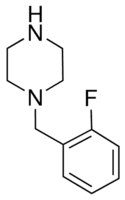
1-(2-Fluorobenzyl)piperazine
C11H15FN2
Chemical Synthesis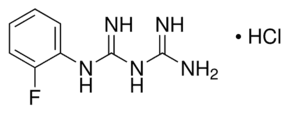
1-(2-Fluorophenyl)biguanide hydrochloride
Chemical Synthesis
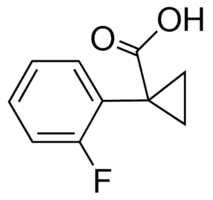
1-(2-Fluorophenyl)cyclopropanecarboxylic acid
C10H9FO2
Chemical Synthesis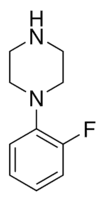
1-(2-Fluorophenyl)piperazine
C10H13FN2
Chemical Synthesis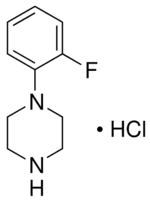
1-(2-Fluorophenyl)piperazine monohydrochloride
C10H13FN2 · HCl
Chemical Synthesis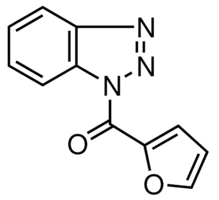
1-(2-Furoyl)-1H-benzotriazole
C11H7N3O2
Chemical Synthesis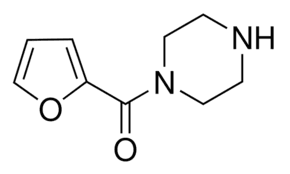
1-(2-Furoyl)piperazine
C9H12N2O2
Chemical Synthesis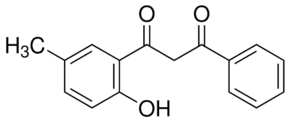
1-(2-Hydroxy-5-methylphenyl)-3-phenyl-1,3-propanedione
Chemical Synthesis
▶ Explore more

Bis(cyclopentadienyl)cobalt(III) hexafluorophosphate
C10H10CoF6P
Catalysis & Inorganic
1-(4-Chlorophenyl)biguanide hydrochloride
ClC6H4NHC(NH)NHC(NH)NH2 · HCl
Chemical Synthesis
Bis(cyclopentadienyl)dimethylzirconium(IV)
Catalysis & Inorganic

1-(4-Chlorophenyl)ethanol
ClC6H4CH(CH3)OH
Chemical Synthesis