
(1S,2R)-(−)-2-(Dibutylamino)-1-phenyl-1-propanol
(1S,2R)-(−)-2-(Dibutylamino)-1-phenyl-1-propanol (CAS 114389-70-7) is a chiral auxiliary from the ephedrine derivative class. With a molecular weight of 263.42 g/mol, this compound is primarily utilised as a ligand in asymmetric synthesis. It facilitates the enantioselective addition of dialkylzinc reagents to carbonyls and imines, enabling the stereocontrolled formation of chiral products. Supplied by TSS since 1998, it is a key reagent for researchers in organic chemistry.
- IUPAC
- (−)-DBNE,N,N-Dibutyl-D-(−)-norephedrine
- Synonyms
- (−)-DBNE,N,N-Dibutyl-D-(−)-norephedrine
![(1S,2R)-(−)-2-(Dibutylamino)-1-phenyl-1-propanol ([CH3(CH2)3]2NCH(CH3)CH(C6H5)OH) — chemical structure, CAS 114389-70-7; Chemistry, fine chemical supplied by Tech Serve Solutions](/_next/image?url=https%3A%2F%2Fpub-f4d920c906024441a773a96f7098e551.r2.dev%2Fimages%2Fproducts%2F114389-70-7.png&w=3840&q=75)
Ligand in Enantioselective Synthesis
This compound serves as a chiral ligand for the enantioselective addition of dialkylzinc reagents to carbonyl compounds. It is also effective in promoting the stereoselective addition to imines, leading to chiral amino alcohol products.
Asymmetric Catalysis
As a derivative of ephedrine, it is employed in asymmetric catalysis to control the stereochemical outcome of reactions. Its chiral structure induces high enantioselectivity in various synthetic transformations.
Chiral Auxiliary
Utilised as a chiral auxiliary, it can be incorporated into a molecule to direct stereoselective reactions, and subsequently removed. This strategy is valuable in the synthesis of complex chiral molecules.
| Molecular weight | 263.42 |
|---|---|
| Linear formula | [CH3(CH2)3]2NCH(CH3)CH(C6H5)OH |
| Assay | 95% |
| Boiling point | 170 °C/2 mmHg(lit.) |
| Density | 0.948 g/mL at 25 °C(lit.) |
| Refractive index | n20/D 1.502(lit.) |
| Optical activity | [α]22/D −21°, c = 2 in chloroform |
| Application | Ligand for enantioselective addition of dialkylzinc to carbonyls1 and imines.2 |

Hazard statements
- H315Causes skin irritation
- H319Causes serious eye irritation
- H335May cause respiratory irritation
Precautionary statements
- P261Avoid breathing dust, fume, gas or vapours
- P305IF IN EYES
| Protective equipment | Eyeshields, full-face respirator (US), Gloves, multi-purpose combination respirator cartridge (US), type ABEK (EN14387) respirator filter |
|---|---|
| Flash point | 110 °C / 230 °F |
| Water hazard class (WGK, DE) | 3 |
| Hazard codes (EU) | Xi |
| Risk statements (R) | 36/37/38 |
| Safety statements (S) | 26-36 |
Hazard information is provided for guidance. Always consult the product Safety Data Sheet (SDS), available on request, before handling.
Documentation
Every batch ships with a Certificate of Analysis covering assay, identity and purity; the grade is confirmed against your enquiry. Safety Data Sheets and technical data sheets are available on request.
Supply & logistics
Samples for technical evaluation; bulk MOQ by grade and packaging. In-stock material ships in 7–10 working days, worldwide, with full export documentation.
What is (1S,2R)-(−)-2-(Dibutylamino)-1-phenyl-1-propanol used for?
+
It is primarily used as a chiral auxiliary and ligand in asymmetric synthesis, particularly for the enantioselective addition of dialkylzinc reagents to carbonyls and imines.
What is the CAS number and chemical formula for this compound?
+
The CAS number is 114389-70-7. The linear formula is [CH3(CH2)3]2NCH(CH3)CH(C6H5)OH.
What grade and purity does Tech Serve Solutions supply?
+
Tech Serve Solutions supplies this chemical with a minimum purity of 95%. This product is not supplied as USP, BP, EP, or for pharmaceutical, food, or nutraceutical use.
What are the safety and handling considerations for this chemical?
+
This compound is classified as an irritant. It may cause skin irritation (H315), serious eye irritation (H319), and respiratory irritation (H335). Appropriate personal protective equipment, including eyeshields and suitable gloves, should be worn. Handle in a well-ventilated area.
Is this product available for export?
+
Yes, Tech Serve Solutions is a global supplier and exporter of fine chemicals and laboratory reagents, including this product.
How can I request a sample or a quote?
+
Please contact our sales team via the website or direct email to request a sample or obtain a quotation for this product.
▶ Related products
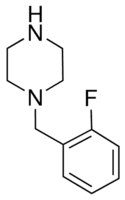
1-(2-Fluorobenzyl)piperazine
C11H15FN2
Chemical Synthesis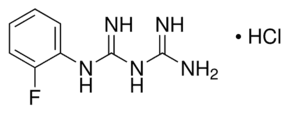
1-(2-Fluorophenyl)biguanide hydrochloride
Chemical Synthesis
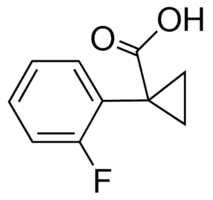
1-(2-Fluorophenyl)cyclopropanecarboxylic acid
C10H9FO2
Chemical Synthesis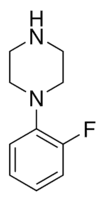
1-(2-Fluorophenyl)piperazine
C10H13FN2
Chemical Synthesis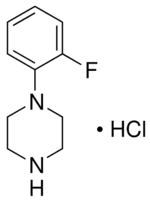
1-(2-Fluorophenyl)piperazine monohydrochloride
C10H13FN2 · HCl
Chemical Synthesis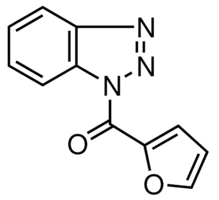
1-(2-Furoyl)-1H-benzotriazole
C11H7N3O2
Chemical Synthesis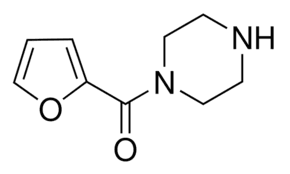
1-(2-Furoyl)piperazine
C9H12N2O2
Chemical Synthesis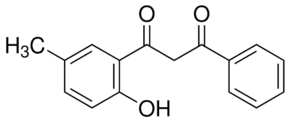
1-(2-Hydroxy-5-methylphenyl)-3-phenyl-1,3-propanedione
Chemical Synthesis
▶ Explore more

Bis(cyclopentadienyl)cobalt(III) hexafluorophosphate
C10H10CoF6P
Catalysis & Inorganic
1-(4-Chlorophenyl)biguanide hydrochloride
ClC6H4NHC(NH)NHC(NH)NH2 · HCl
Chemical Synthesis
Bis(cyclopentadienyl)dimethylzirconium(IV)
Catalysis & Inorganic

1-(4-Chlorophenyl)ethanol
ClC6H4CH(CH3)OH
Chemical Synthesis