
16-Carboxyhexadecyl disulfide
16-Carboxyhexadecyl disulfide (CAS: 112122-99-3), with the molecular formula C32H64O4S2 and a molecular weight of 576.98, is a valuable disulfide compound. This material is primarily utilised in advanced scientific research and development. Its specific chemical structure lends itself to applications within materials science, particularly in the fields of micro/nanoelectronics and self-assembly processes, facilitating the creation of organised molecular structures.
- IUPAC
- 16,16′-Dithiobis-hexadecanoic acid
- Synonyms
- 16,16′-Dithiobis-hexadecanoic acid

Materials Science Research
This compound serves as a key component in the development of novel materials. Its disulfide bond and long alkyl chain offer unique properties for material design and characterisation.
Micro/Nanoelectronics Fabrication
Utilised in the creation of advanced electronic devices at the micro and nano scale. It can be employed in surface functionalisation and the development of molecular electronic components.
Self-Assembly and Contact Printing
Its molecular architecture makes it suitable for directed self-assembly processes and contact printing techniques, enabling the precise arrangement of molecules on surfaces.
Surface Chemistry
Applied in modifying surfaces to impart specific chemical or physical properties. The disulfide linkage is particularly useful for forming robust self-assembled monolayers (SAMs).
| Molecular weight | 576.98 |
|---|---|
| Empirical formula | C32H64O4S2 |
| Assay | 97% |
| Storage temperature | 2-8°C |
| Melting point | 106-111 °C |

Hazard statements
- H315Causes skin irritation
- H319Causes serious eye irritation
- H335May cause respiratory irritation
Precautionary statements
- P261Avoid breathing dust, fume, gas or vapours
- P305IF IN EYES
| Protective equipment | dust mask type N95 (US), Eyeshields, Gloves |
|---|---|
| Transport (UN / ADR) | UN 3335 |
| Water hazard class (WGK, DE) | 3 |
| Hazard codes (EU) | Xi |
| Risk statements (R) | 36/37/38 |
| Safety statements (S) | 26 |
Hazard information is provided for guidance. Always consult the product Safety Data Sheet (SDS), available on request, before handling.
Documentation
Every batch ships with a Certificate of Analysis covering assay, identity and purity; the grade is confirmed against your enquiry. Safety Data Sheets and technical data sheets are available on request.
Supply & logistics
Samples for technical evaluation; bulk MOQ by grade and packaging. In-stock material ships in 7–10 working days, worldwide, with full export documentation.
What is 16-Carboxyhexadecyl disulfide used for?
+
16-Carboxyhexadecyl disulfide is used in materials science, micro/nanoelectronics, and self-assembly processes, including contact printing, for surface functionalisation and creating organised molecular structures.
What are the CAS number and formula for 16-Carboxyhexadecyl disulfide?
+
The CAS number for 16-Carboxyhexadecyl disulfide is 112122-99-3, and its empirical formula is C32H64O4S2.
What grade and purity does Tech Serve Solutions supply?
+
Tech Serve Solutions supplies 16-Carboxyhexadecyl disulfide with an assay of 97%. This is a technical/research grade material and TSS does not represent it as USP, BP, EP, or any other pharmacopoeia grade.
How should 16-Carboxyhexadecyl disulfide be handled?
+
Handle 16-Carboxyhexadecyl disulfide with care. It is classified as causing skin irritation (H315), serious eye irritation (H319), and may cause respiratory irritation (H335). Use appropriate personal protective equipment, including a dust mask type N95, eyeshields, and gloves. Ensure adequate ventilation.
Is 16-Carboxyhexadecyl disulfide available for export and how is it shipped?
+
Yes, Tech Serve Solutions is a global supplier and exporter of fine chemicals. Products are carefully packaged to meet international shipping regulations, including the UN 3335 classification for transport.
How can I request a quote or sample for 16-Carboxyhexadecyl disulfide?
+
To request a quote or a sample of 16-Carboxyhexadecyl disulfide, please contact our sales team via the website or by telephone with your specific requirements.
▶ Related products
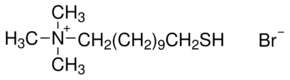
(11-Mercaptoundecyl)-N,N,N-trimethylammonium bromide
Micro / NanoElectronics

(11-Mercaptoundecyl)hexa(ethylene glycol)
C23H48O7S
Micro / NanoElectronics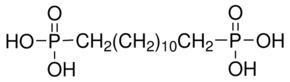
(12-Phosphonododecyl)phosphonic acid
C12H28O6P2
Micro / NanoElectronics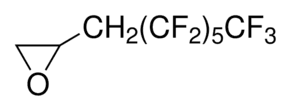
(2,2,3,3,4,4,5,5,6,6,7,7,7-Tridecafluoroheptyl)oxirane
C9H5F13O
Micro / NanoElectronics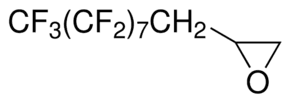
(2,2,3,3,4,4,5,5,6,6,7,7,8,8,9,9,9-Heptadecafluorononyl)oxirane
C11H5F17O
Micro / NanoElectronics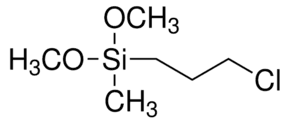
(3-Chloropropyl)dimethoxymethylsilane
Cl(CH2)3Si(OCH3)2CH3
Micro / NanoElectronics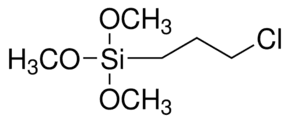
(3-Chloropropyl)trimethoxysilane
Cl(CH2)3Si(OCH3)3
Micro / NanoElectronics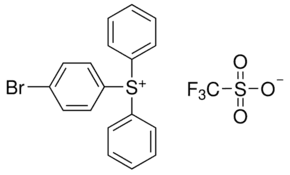
(4-Bromophenyl)diphenylsulfonium triflate
C19H14BrF3O3S2
Micro / NanoElectronics▶ Explore more

Bis(cyclopentadienyl)cobalt(III) hexafluorophosphate
C10H10CoF6P
Catalysis & Inorganic
1-(4-Chlorophenyl)biguanide hydrochloride
ClC6H4NHC(NH)NHC(NH)NH2 · HCl
Chemical Synthesis
Bis(cyclopentadienyl)dimethylzirconium(IV)
Catalysis & Inorganic

1-(4-Chlorophenyl)ethanol
ClC6H4CH(CH3)OH
Chemical Synthesis