
11-Amino-1-undecanethiol hydrochloride
11-Amino-1-undecanethiol hydrochloride (CAS: 143339-58-6), a bifunctional molecule featuring both an amine and a thiol group, is primarily utilized in materials science. This compound is crucial for forming self-assembled monolayers (SAMs) on gold surfaces, enabling the introduction of amine functionalities. These amine groups serve as reactive sites for subsequent immobilization of biomolecules or other amine-reactive substances, facilitating surface modification in microelectronics and nanotechnology.
- IUPAC
- 11-Aminoundecanethiol hydrochloride,11-Mercaptoundecylamine,AUT,MUAM
- Synonyms
- 11-Aminoundecanethiol hydrochloride11-Mercaptoundecylamine

Surface Modification with Amine Functionality
This thiol readily forms self-assembled monolayers (SAMs) on gold surfaces. The terminal amine group provides a reactive site for attaching proteins, biomaterials, or other amine-reactive compounds, enabling precise surface functionalization.
Modifying Gold Electrodes
Utilised in electrochemical studies, this molecule can be self-assembled onto gold electrodes. It allows for the investigation of how terminal groups influence the redox behaviour of analytes, such as ferrocene derivatives.
Development of Functional Materials
Serves as a building block for creating advanced materials by modifying gold surfaces with tailored functionalities. This is particularly relevant in micro- and nanoelectronics applications requiring specific surface properties.
| Molecular weight | 239.85 |
|---|---|
| Linear formula | HSCH2(CH2)9CH2NH2 · HCl |
| Assay | 99% |
| Storage temperature | 2-8°C |
| Application | Creating SAMs containing amino functionalized sites.1 This molecule is used to modify gold surfaces with amine groups. The amine group is usually modified using amine-reactive materials, such as proteins or biomaterials, to further functionalize the gold surface. This material has also been self-assembled onto gold electrodes for a study on the effect of the terminal groups on the redox responses of ferrocene derivatives using the voltammetric method.2 Tanahashi and co-workers modified a gold surface with SAMs of several kinds of functionalized alkanethiols.3 |
| Melting point | 120-170 °C |

Hazard statements
- H315Causes skin irritation
- H319Causes serious eye irritation
- H335May cause respiratory irritation
Precautionary statements
- P261Avoid breathing dust, fume, gas or vapours
- P305IF IN EYES
| Protective equipment | dust mask type N95 (US), Eyeshields, Gloves |
|---|---|
| Transport (UN / ADR) | UN 3335 |
| Water hazard class (WGK, DE) | 3 |
| Hazard codes (EU) | Xi |
| Risk statements (R) | 36/37/38 |
| Safety statements (S) | 26 |
Hazard information is provided for guidance. Always consult the product Safety Data Sheet (SDS), available on request, before handling.
Documentation
Every batch ships with a Certificate of Analysis covering assay, identity and purity; the grade is confirmed against your enquiry. Safety Data Sheets and technical data sheets are available on request.
Supply & logistics
Samples for technical evaluation; bulk MOQ by grade and packaging. In-stock material ships in 7–10 working days, worldwide, with full export documentation.
What is 11-Amino-1-undecanethiol hydrochloride used for?
+
11-Amino-1-undecanethiol hydrochloride is used for creating self-assembled monolayers (SAMs) on gold surfaces, introducing amine functionalities for further surface modification. It is also used in electrochemical studies and for developing functional materials in microelectronics.
What are the CAS number and formula for 11-Amino-1-undecanethiol hydrochloride?
+
The CAS number is 143339-58-6, and the linear formula is HSCH2(CH2)9CH2NH2 · HCl.
What grade and purity does Tech Serve Solutions supply?
+
Tech Serve Solutions supplies this chemical with an assay of 99%. We do not represent it as USP, BP, EP, or any other pharmacopoeia grade.
What are the safety considerations when handling 11-Amino-1-undecanethiol hydrochloride?
+
This compound is a Warning: GHS07. It causes skin irritation (H315), serious eye irritation (H319), and may cause respiratory irritation (H335). Handle with appropriate personal protective equipment, including a dust mask (type N95 US), eyeshields, and gloves, in a well-ventilated area.
How is 11-Amino-1-undecanethiol hydrochloride packaged and exported?
+
Products are carefully packaged according to international shipping regulations and are exported globally by Tech Serve Solutions.
How can I request a sample or quote for 11-Amino-1-undecanethiol hydrochloride?
+
Please contact our sales team via the website or by telephone to request a sample or a quotation for 11-Amino-1-undecanethiol hydrochloride.
▶ Related products
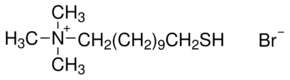
(11-Mercaptoundecyl)-N,N,N-trimethylammonium bromide
Micro / NanoElectronics

(11-Mercaptoundecyl)hexa(ethylene glycol)
C23H48O7S
Micro / NanoElectronics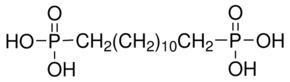
(12-Phosphonododecyl)phosphonic acid
C12H28O6P2
Micro / NanoElectronics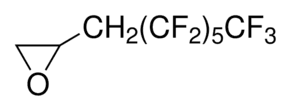
(2,2,3,3,4,4,5,5,6,6,7,7,7-Tridecafluoroheptyl)oxirane
C9H5F13O
Micro / NanoElectronics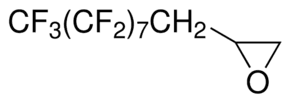
(2,2,3,3,4,4,5,5,6,6,7,7,8,8,9,9,9-Heptadecafluorononyl)oxirane
C11H5F17O
Micro / NanoElectronics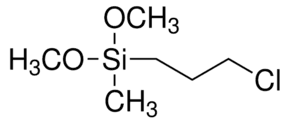
(3-Chloropropyl)dimethoxymethylsilane
Cl(CH2)3Si(OCH3)2CH3
Micro / NanoElectronics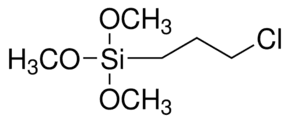
(3-Chloropropyl)trimethoxysilane
Cl(CH2)3Si(OCH3)3
Micro / NanoElectronics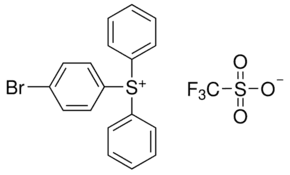
(4-Bromophenyl)diphenylsulfonium triflate
C19H14BrF3O3S2
Micro / NanoElectronics▶ Explore more

Bis(cyclopentadienyl)cobalt(III) hexafluorophosphate
C10H10CoF6P
Catalysis & Inorganic
1-(4-Chlorophenyl)biguanide hydrochloride
ClC6H4NHC(NH)NHC(NH)NH2 · HCl
Chemical Synthesis
Bis(cyclopentadienyl)dimethylzirconium(IV)
Catalysis & Inorganic

1-(4-Chlorophenyl)ethanol
ClC6H4CH(CH3)OH
Chemical Synthesis