
1,8-Diisocyanatooctane
1,8-Diisocyanatooctane (CAS: 10124-86-4) is an organic compound with the linear formula OCN(CH2)8NCO and a molecular weight of 196.25 g/mol. This difunctional isocyanate serves as a key building block in polymer science. It is primarily utilised as a monomer in the synthesis of polyurethanes and other polymers, contributing unique properties derived from its linear eight-carbon chain, making it valuable for advanced materials research and development.
- IUPAC
- Octamethylene diisocyanate
- Synonyms
- Octamethylene diisocyanate1,8-bis(isocyanato)octaneOctamethylene di-isocyanate

Polyurethane Synthesis
1,8-Diisocyanatooctane is employed as a monomer in the production of polyurethanes. Its aliphatic nature and long chain length can impart flexibility and specific mechanical properties to the resulting polymer chains.
Polymer Science Research
This compound is a valuable reagent for researchers in polymer science exploring the synthesis of novel polymers. It allows for the creation of materials with tailored characteristics due to its difunctional isocyanate groups and octamethylene spacer.
Materials Science Applications
In materials science, 1,8-diisocyanatooctane can be used to develop advanced materials. Its incorporation into polymer backbones can influence properties such as elasticity, adhesion, and thermal stability for specialised applications.
| Molecular weight | 196.25 |
|---|---|
| Linear formula | OCN(CH2)8NCO |
| Assay | 98% |
| Boiling point | 156 °C/15 mmHg(lit.) |
| Density | 1.007 g/mL at 25 °C(lit.) |
| Refractive index | n20/D 1.455(lit.) |
| Storage temperature | 2-8°C |

Hazard statements
- H302Harmful if swallowed
- H312Harmful in contact with skin
- H315Causes skin irritation
- H319Causes serious eye irritation
- H332Harmful if inhaled
- H335May cause respiratory irritation
Precautionary statements
- P261Avoid breathing dust, fume, gas or vapours
- P280Wear protective gloves, clothing and eye/face protection
- P305IF IN EYES
| Protective equipment | Eyeshields, Faceshields, full-face respirator (US), Gloves, multi-purpose combination respirator cartridge (US), type ABEK (EN14387) respirator filter |
|---|---|
| Flash point | 109 °C / 228.2 °F |
| Transport (UN / ADR) | UN 2206PSN2B 6.1 / PGII |
| Water hazard class (WGK, DE) | 3 |
| Hazard codes (EU) | Xn |
| Risk statements (R) | 20/21/22-36/37/38 |
| Safety statements (S) | 26-27-37/39 |
Hazard information is provided for guidance. Always consult the product Safety Data Sheet (SDS), available on request, before handling.
Documentation
Every batch ships with a Certificate of Analysis covering assay, identity and purity; the grade is confirmed against your enquiry. Safety Data Sheets and technical data sheets are available on request.
Supply & logistics
Samples for technical evaluation; bulk MOQ by grade and packaging. In-stock material ships in 7–10 working days, worldwide, with full export documentation.
What is 1,8-Diisocyanatooctane used for?
+
1,8-Diisocyanatooctane is primarily used as a monomer in the synthesis of polyurethanes and other polymers, finding applications in polymer and materials science research for developing materials with specific properties.
What is the CAS number and formula for 1,8-Diisocyanatooctane?
+
The CAS number for 1,8-Diisocyanatooctane is 10124-86-4, and its linear formula is OCN(CH2)8NCO.
What grade and purity does Tech Serve Solutions supply?
+
Tech Serve Solutions supplies 1,8-Diisocyanatooctane with a minimum assay of 98%. This product is supplied for research and development purposes and is not represented as USP, BP, or EP grade.
How should 1,8-Diisocyanatooctane be handled safely?
+
1,8-Diisocyanatooctane is a Warning substance (GHS07) that is harmful if swallowed, in contact with skin, or if inhaled, and causes skin and eye irritation. Appropriate personal protective equipment, including eyeshields, faceshields, gloves, and suitable respiratory protection such as a full-face respirator or a type ABEK filter, must be used. Handle in a well-ventilated area and avoid breathing vapours. Refer to the Safety Data Sheet for comprehensive handling procedures.
Is 1,8-Diisocyanatooctane a controlled substance?
+
Based on the provided data, 1,8-Diisocyanatooctane is not listed as a controlled substance. However, users should always verify local regulations.
How is 1,8-Diisocyanatooctane packed and shipped?
+
1,8-Diisocyanatooctane is typically supplied in appropriate packaging for chemical transport, adhering to regulations such as UN 2206, PSN2B, Class 6.1, PGII. Tech Serve Solutions is experienced in exporting chemicals globally.
How can I request a quote or sample for 1,8-Diisocyanatooctane?
+
To request a quote or a sample of 1,8-Diisocyanatooctane, please contact the Tech Serve Solutions sales team through our website or by phone, providing your specific requirements.
▶ Related products
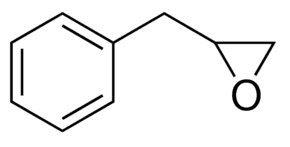
(2,3-Epoxypropyl)benzene
Polymer Science
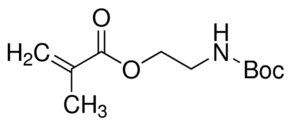
(2-Boc-amino)ethyl methacrylate
C11H19NO4
Polymer Science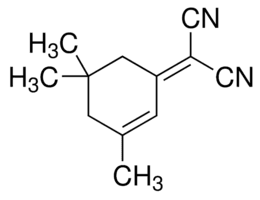
(3,5,5-Trimethylcyclohex-2-enylidene)malononitrile
Polymer Science
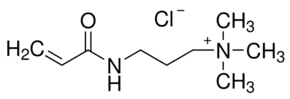
(3-Acrylamidopropyl)trimethylammonium chloride solution
Polymer Science
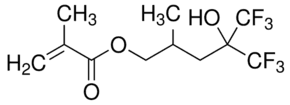
1,1,1-Trifluoro-2-(trifluoromethyl)-2-hydroxy-4-methyl-5-pentyl methacrylate
Polymer Science
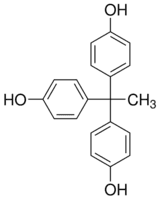
1,1,1-Tris(4-hydroxyphenyl)ethane
Polymer Science
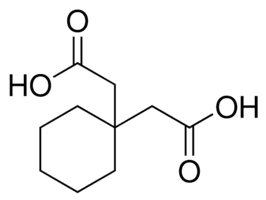
1,1-Cyclohexanediacetic acid
Polymer Science

1,12-Diisocyanatododecane
Polymer Science
▶ Explore more

Bis(cyclopentadienyl)cobalt(III) hexafluorophosphate
C10H10CoF6P
Catalysis & Inorganic
1-(4-Chlorophenyl)biguanide hydrochloride
ClC6H4NHC(NH)NHC(NH)NH2 · HCl
Chemical Synthesis
Bis(cyclopentadienyl)dimethylzirconium(IV)
Catalysis & Inorganic

1-(4-Chlorophenyl)ethanol
ClC6H4CH(CH3)OH
Chemical Synthesis