
1,6-Hexanediol diacrylate
1,6-Hexanediol diacrylate (CAS: 13048-33-4) is a difunctional acrylate monomer with a molecular weight of 226.27 g/mol. This versatile chemical serves as a crucial building block in polymer science and materials development. Its reactive acrylate groups enable it to function as a crosslinking agent, rapidly polymerising to form durable networks. Primarily used in UV-curable coatings, inks, adhesives, and resins, it enhances properties such as hardness and chemical resistance.
- IUPAC
- HDODA
- Synonyms
- [H2C=CHCO2(CH2)3-]2HDODA
![1,6-Hexanediol diacrylate ([H2C=CHCO2(CH2)3-]2) — chemical structure, CAS 13048-33-4; Chemistry, fine chemical supplied by Tech Serve Solutions](/_next/image?url=https%3A%2F%2Fpub-f4d920c906024441a773a96f7098e551.r2.dev%2Fimages%2Fproducts%2F13048-33-4.png&w=3840&q=75)
UV-Curable Coatings and Inks
1,6-Hexanediol diacrylate is widely employed in the formulation of UV-curable coatings and inks. Its rapid polymerisation upon UV exposure contributes to fast curing times and the development of hard, scratch-resistant surfaces.
Adhesives and Sealants
As a difunctional monomer, HDODA is utilised in the production of adhesives and sealants. It provides excellent adhesion properties and contributes to the mechanical strength and durability of the cured product.
Polymer Synthesis
This compound acts as a crosslinking agent in the synthesis of various polymers. It allows for the creation of three-dimensional polymer networks, modifying material properties like flexibility and thermal stability.
Resin Formulations
It finds application in diverse resin systems, including those for 3D printing and composite materials. Its ability to copolymerise with other monomers allows for fine-tuning of material characteristics.
| Molecular weight | 226.27 |
|---|---|
| Linear formula | [H2C=CHCO2(CH2)3-]2 |
| Assay | 80% |
| Grade | technical grade |
| Density | 1.01 g/mL at 25 °C(lit.) |
| Refractive index | n20/D 1.456(lit.) |
| Vapour pressure | <0.01 mmHg (20 °C) |
| Vapour density | >1 (vs air) |
| Contains / stabiliser | 100 ppm monomethyl ether hydroquinone as inhibitor |

Hazard statements
- H315Causes skin irritation
- H317May cause an allergic skin reaction
- H319Causes serious eye irritation
Precautionary statements
- P280Wear protective gloves, clothing and eye/face protection
- P305IF IN EYES
| Protective equipment | Faceshields, full-face respirator (US), Gloves, Goggles, multi-purpose combination respirator cartridge (US), type ABEK (EN14387) respirator filter |
|---|---|
| Flash point | 113 °C / 235.4 °F |
| Transport (UN / ADR) | UN 3082 9 / PGIII |
| Water hazard class (WGK, DE) | 2 |
| Hazard codes (EU) | Xi |
| Risk statements (R) | 36/38-43 |
| Safety statements (S) | 39 |
Hazard information is provided for guidance. Always consult the product Safety Data Sheet (SDS), available on request, before handling.
Documentation
Every batch ships with a Certificate of Analysis covering assay, identity and purity; the grade is confirmed against your enquiry. Safety Data Sheets and technical data sheets are available on request.
Supply & logistics
Samples for technical evaluation; bulk MOQ by grade and packaging. In-stock material ships in 7–10 working days, worldwide, with full export documentation.
What is 1,6-Hexanediol diacrylate used for?
+
1,6-Hexanediol diacrylate is primarily used as a crosslinking agent in UV-curable coatings, inks, adhesives, sealants, resins, and for polymer synthesis, contributing to hardness, chemical resistance, and rapid curing.
What are the CAS number and formula for 1,6-Hexanediol diacrylate?
+
The CAS number is 13048-33-4, and its linear formula is [H2C=CHCO2(CH2)3-]2.
What grade and purity does Tech Serve Solutions supply?
+
Tech Serve Solutions supplies 1,6-Hexanediol diacrylate in technical grade with an assay of 80%. TSS does not represent this product as USP, BP, or EP grade.
How should 1,6-Hexanediol diacrylate be handled safely?
+
1,6-Hexanediol diacrylate is classified as a Warning substance. It causes skin irritation (H315), may cause an allergic skin reaction (H317), and causes serious eye irritation (H319). Appropriate personal protective equipment, including gloves, eye protection, and suitable respiratory protection, must be used. Handle in a well-ventilated area.
How is 1,6-Hexanediol diacrylate packed and shipped?
+
1,6-Hexanediol diacrylate is shipped as UN 3082, Class 9, Packing Group III. Packaging details are available upon request.
How can I request a quote or sample?
+
To request a quote or sample of 1,6-Hexanediol diacrylate, please contact our sales team via the website or direct inquiry.
▶ Related products
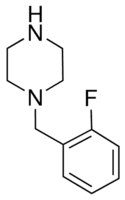
1-(2-Fluorobenzyl)piperazine
C11H15FN2
Chemical Synthesis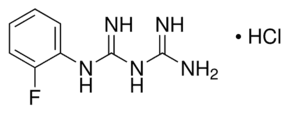
1-(2-Fluorophenyl)biguanide hydrochloride
Chemical Synthesis
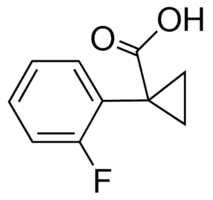
1-(2-Fluorophenyl)cyclopropanecarboxylic acid
C10H9FO2
Chemical Synthesis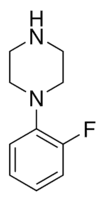
1-(2-Fluorophenyl)piperazine
C10H13FN2
Chemical Synthesis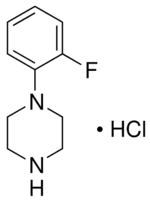
1-(2-Fluorophenyl)piperazine monohydrochloride
C10H13FN2 · HCl
Chemical Synthesis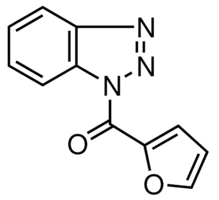
1-(2-Furoyl)-1H-benzotriazole
C11H7N3O2
Chemical Synthesis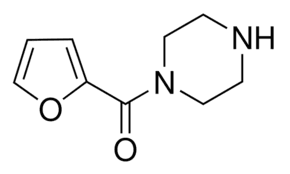
1-(2-Furoyl)piperazine
C9H12N2O2
Chemical Synthesis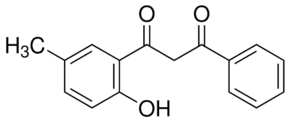
1-(2-Hydroxy-5-methylphenyl)-3-phenyl-1,3-propanedione
Chemical Synthesis
▶ Explore more

Bis(cyclopentadienyl)cobalt(III) hexafluorophosphate
C10H10CoF6P
Catalysis & Inorganic
1-(4-Chlorophenyl)biguanide hydrochloride
ClC6H4NHC(NH)NHC(NH)NH2 · HCl
Chemical Synthesis
Bis(cyclopentadienyl)dimethylzirconium(IV)
Catalysis & Inorganic

1-(4-Chlorophenyl)ethanol
ClC6H4CH(CH3)OH
Chemical Synthesis