
1-(5-Bromo-2-hydroxyphenyl)-1,3-butanedione
1-(5-Bromo-2-hydroxyphenyl)-1,3-butanedione (CAS 207387-68-6) is a brominated aromatic 1,3-diketone with the molecular formula C10H9BrO3 and a molecular weight of 257.08. Supplied as a crystalline solid (melting point 113-118 °C), it combines a 5-bromo-2-hydroxyphenyl group with a reactive 1,3-butanedione chain. Tech Serve Solutions offers it as a research-grade organic building block for chemical synthesis, primarily in the preparation of chromones, flavones and related heterocyclic scaffolds.
- Synonyms
- 1-(5-Bromo-2-hydroxyphenyl)-1,3-butanedione1-(5-bromo-2-hydroxyphenyl)butane-1,3-dione5'-bromo-2'-hydroxyacetoacetophenoneBrC6H3(OH)COCH2COCH3CAS 207387-68-6MFCD04039883
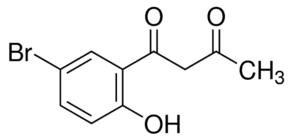
Heterocyclic building block
The ortho-hydroxyaryl 1,3-diketone motif is a classic precursor to chromones, flavones and 4H-chromen-4-ones via intramolecular cyclisation. The bromo and hydroxy substituents allow further structural elaboration of these scaffolds.
Pharmaceutical intermediate synthesis
As a functionalised diketone, it serves as an intermediate in multi-step routes toward biologically active heterocycles. It is intended for research and manufacturing use, not for direct human or veterinary administration.
Cross-coupling substrate
The aryl bromide handle is suited to palladium-catalysed cross-coupling reactions such as Suzuki, Heck and Buchwald-Hartwig chemistry, enabling the introduction of further aryl, vinyl or amino groups.
Chelation and condensation chemistry
The 1,3-dicarbonyl system readily undergoes enolisation and condensation with amines, hydrazines and other nucleophiles to give pyrazoles, isoxazoles and related rings, and can act as a ligand precursor.
Laboratory reference and discovery research
It is used in academic and industrial discovery laboratories as a defined building block for exploratory and medicinal-chemistry programmes where a brominated salicyloyl diketone is required.
| Molecular weight | 257.08 |
|---|---|
| Linear formula | BrC6H3(OH)COCH2COCH3 |
| Melting point | 113-118 °C(lit.) |

Hazard statements
- H315Causes skin irritation
- H319Causes serious eye irritation
- H335May cause respiratory irritation
Precautionary statements
- P261Avoid breathing dust, fume, gas or vapours
- P305IF IN EYES
| Protective equipment | dust mask type N95 (US), Eyeshields, Gloves |
|---|---|
| Water hazard class (WGK, DE) | 3 |
| Hazard codes (EU) | Xi |
| Risk statements (R) | 36/37/38 |
| Safety statements (S) | 26-36 |
Hazard information is provided for guidance. Always consult the product Safety Data Sheet (SDS), available on request, before handling.
Documentation
Every batch ships with a Certificate of Analysis covering assay, identity and purity; the grade is confirmed against your enquiry. Safety Data Sheets and technical data sheets are available on request.
Supply & logistics
Samples for technical evaluation; bulk MOQ by grade and packaging. In-stock material ships in 7–10 working days, worldwide, with full export documentation.
What is 1-(5-Bromo-2-hydroxyphenyl)-1,3-butanedione used for?
+
It is used mainly as an organic building block and intermediate in chemical synthesis. The combination of an ortho-hydroxyaryl group, an aryl bromide and a 1,3-diketone makes it valuable for constructing chromones, flavones, pyrazoles and other heterocyclic scaffolds, and for palladium-catalysed cross-coupling reactions.
What is the CAS number and molecular formula of 1-(5-Bromo-2-hydroxyphenyl)-1,3-butanedione?
+
The CAS number is 207387-68-6. The linear formula is BrC6H3(OH)COCH2COCH3, corresponding to the molecular formula C10H9BrO3, with a molecular weight of 257.08 and MDL number MFCD04039883.
What grade and purity does Tech Serve Solutions supply?
+
We supply 1-(5-Bromo-2-hydroxyphenyl)-1,3-butanedione as a research/technical-grade organic building block intended for synthesis and laboratory use. We do not represent it as USP, BP or EP pharmacopoeial grade. A certificate of analysis with the prevailing assay can be provided with each batch on request.
What are the safety and handling requirements for this compound?
+
It is classified GHS07 with the signal word Warning and hazard statements H315 (causes skin irritation), H319 (causes serious eye irritation) and H335 (may cause respiratory irritation). Handle in a well-ventilated area, avoid dust formation, and wear gloves, eye protection and an N95-type dust mask. It carries German Water Hazard Class WGK 3 (highly hazardous to water), so prevent release to drains and watercourses. Always consult the Safety Data Sheet before use.
How is 1-(5-Bromo-2-hydroxyphenyl)-1,3-butanedione packed, shipped and exported?
+
It is supplied as a solid in tightly sealed containers sized from gram research quantities to larger bulk orders, with packaging suited to the volume. Each consignment ships with a certificate of analysis and Safety Data Sheet, and Tech Serve Solutions handles export documentation and compliant international logistics to most destinations.
How do I request a sample or quote?
+
Contact Tech Serve Solutions with your required quantity, packaging and destination, and our team will respond with availability, lead time and a formal quotation. Samples can be arranged for qualification, subject to availability.
▶ Related products
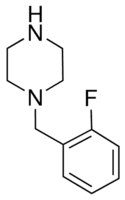
1-(2-Fluorobenzyl)piperazine
C11H15FN2
Chemical Synthesis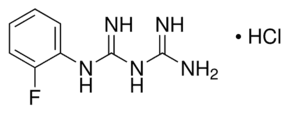
1-(2-Fluorophenyl)biguanide hydrochloride
Chemical Synthesis
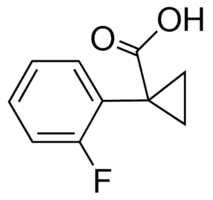
1-(2-Fluorophenyl)cyclopropanecarboxylic acid
C10H9FO2
Chemical Synthesis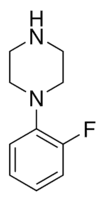
1-(2-Fluorophenyl)piperazine
C10H13FN2
Chemical Synthesis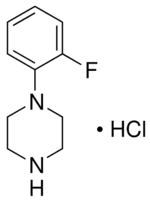
1-(2-Fluorophenyl)piperazine monohydrochloride
C10H13FN2 · HCl
Chemical Synthesis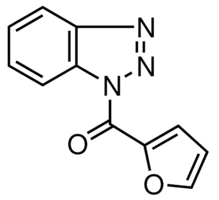
1-(2-Furoyl)-1H-benzotriazole
C11H7N3O2
Chemical Synthesis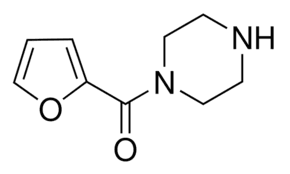
1-(2-Furoyl)piperazine
C9H12N2O2
Chemical Synthesis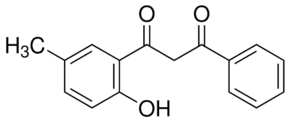
1-(2-Hydroxy-5-methylphenyl)-3-phenyl-1,3-propanedione
Chemical Synthesis
▶ Explore more

Bis(cyclopentadienyl)cobalt(III) hexafluorophosphate
C10H10CoF6P
Catalysis & Inorganic
1-(4-Chlorophenyl)biguanide hydrochloride
ClC6H4NHC(NH)NHC(NH)NH2 · HCl
Chemical Synthesis
Bis(cyclopentadienyl)dimethylzirconium(IV)
Catalysis & Inorganic

1-(4-Chlorophenyl)ethanol
ClC6H4CH(CH3)OH
Chemical Synthesis