
1,4-Diisopropylbenzene
1,4-Diisopropylbenzene (CAS: 100-18-5), a disubstituted aromatic hydrocarbon with the molecular formula C12H18 and a molecular weight of 162.27 g/mol. This compound is primarily recognised for its role as a crucial reagent in advanced chemical synthesis, notably in the TALSPEAK process for the separation of lanthanides and actinides in nuclear fuel reprocessing. Supplied at 97% purity, it serves as a valuable building block in organic synthesis and research applications.
- Synonyms
- C6H4[CH(CH3)2]2p-Cymene, 1,4-di-Benzene, 1,4-diisopropyl-
![1,4-Diisopropylbenzene (C6H4[CH(CH3)2]2) — chemical structure, CAS 100-18-5; Chemistry, fine chemical supplied by Tech Serve Solutions](/_next/image?url=https%3A%2F%2Fpub-f4d920c906024441a773a96f7098e551.r2.dev%2Fimages%2Fproducts%2F100-18-5.png&w=3840&q=75)
Nuclear Fuel Reprocessing
1,4-Diisopropylbenzene is utilised in the TALSPEAK process, a method for separating trivalent actinide and lanthanide cations from aqueous complexes. This application is critical in the reprocessing of used nuclear fuel.
Organic Synthesis
As an arene and organic building block, 1,4-diisopropylbenzene serves as a precursor or intermediate in various organic synthesis pathways. Its structure allows for further functionalisation in complex chemical reactions.
Chemical Research
This compound is employed in chemical research laboratories as a reagent and building block for the development of new materials and chemical processes. Its specific properties make it suitable for specialised research.
| Molecular weight | 162.27 |
|---|---|
| Linear formula | C6H4[CH(CH3)2]2 |
| Assay | 97% |
| Boiling point | 210 °C(lit.) |
| Density | 0.857 g/mL at 25 °C(lit.) |
| Refractive index | n20/D 1.489(lit.) |
| Vapour pressure | 0.25 mmHg (20 °C) |
| Melting point | −17 °C(lit.) |
| Vapour density | 5.6 (vs air) |
| Application | 1,4-diisopropylbenzene (DIPB) has been used in the Trivalent Actinide-Lanthanide Separation by Phosphorus reagent Extraction from Aqueous Komplexes (TALSPEAK) process for separating trivalent lanthanides from trivalent actinide cations, in used nuclear fuel reprocessing1. |

Hazard statements
- H315Causes skin irritation
- H413May cause long-lasting harmful effects to aquatic life
| Protective equipment | Eyeshields, full-face respirator (US), Gloves, multi-purpose combination respirator cartridge (US), type ABEK (EN14387) respirator filter |
|---|---|
| Flash point | 76 °C / 168.8 °F |
| Transport (UN / ADR) | UN 3082 9 / PGIII |
| Water hazard class (WGK, DE) | 2 |
| Hazard codes (EU) | Xi |
| Risk statements (R) | 38-53 |
Hazard information is provided for guidance. Always consult the product Safety Data Sheet (SDS), available on request, before handling.
Documentation
Every batch ships with a Certificate of Analysis covering assay, identity and purity; the grade is confirmed against your enquiry. Safety Data Sheets and technical data sheets are available on request.
Supply & logistics
Samples for technical evaluation; bulk MOQ by grade and packaging. In-stock material ships in 7–10 working days, worldwide, with full export documentation.
What is 1,4-Diisopropylbenzene used for?
+
1,4-Diisopropylbenzene is used in chemical synthesis, particularly in the TALSPEAK process for separating lanthanides and actinides in nuclear fuel reprocessing, and as an organic building block in research.
What is the CAS number and formula for 1,4-Diisopropylbenzene?
+
The CAS number is 100-18-5 and the linear formula is C6H4[CH(CH3)2]2.
What grade and purity does Tech Serve Solutions supply?
+
Tech Serve Solutions supplies 1,4-Diisopropylbenzene at a purity of 97%. This product is not represented as USP, BP, or EP grade.
How should 1,4-Diisopropylbenzene be handled safely?
+
Handle with care using appropriate personal protective equipment, including eyeshields and gloves. Ensure adequate ventilation and use a suitable respirator filter (e.g., type ABEK) as indicated by the Warning signal word and H315 (Causes skin irritation) and H413 (May cause long lasting harmful effects to aquatic life) hazard statements.
Is 1,4-Diisopropylbenzene a controlled substance?
+
Based on the provided data, 1,4-Diisopropylbenzene is not indicated as a controlled substance.
How is 1,4-Diisopropylbenzene shipped and exported?
+
1,4-Diisopropylbenzene is shipped and exported in compliance with regulations, with relevant transport information including UN 3082, Class 9, Packing Group III.
How can I request a quote or sample of 1,4-Diisopropylbenzene?
+
Please contact the Tech Serve Solutions sales team via our website to request a quote or sample for 1,4-Diisopropylbenzene.
▶ Related products
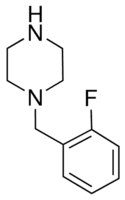
1-(2-Fluorobenzyl)piperazine
C11H15FN2
Chemical Synthesis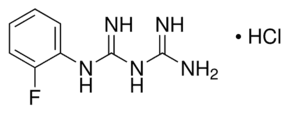
1-(2-Fluorophenyl)biguanide hydrochloride
Chemical Synthesis
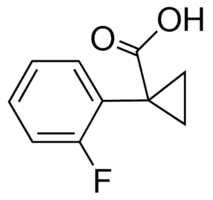
1-(2-Fluorophenyl)cyclopropanecarboxylic acid
C10H9FO2
Chemical Synthesis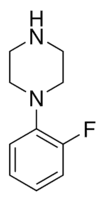
1-(2-Fluorophenyl)piperazine
C10H13FN2
Chemical Synthesis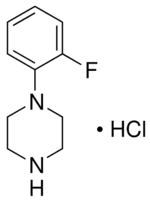
1-(2-Fluorophenyl)piperazine monohydrochloride
C10H13FN2 · HCl
Chemical Synthesis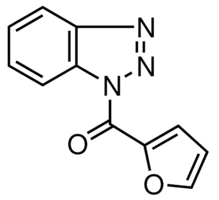
1-(2-Furoyl)-1H-benzotriazole
C11H7N3O2
Chemical Synthesis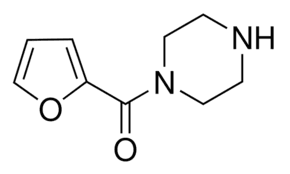
1-(2-Furoyl)piperazine
C9H12N2O2
Chemical Synthesis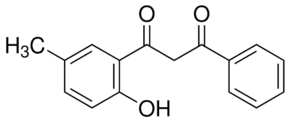
1-(2-Hydroxy-5-methylphenyl)-3-phenyl-1,3-propanedione
Chemical Synthesis
▶ Explore more

Bis(cyclopentadienyl)cobalt(III) hexafluorophosphate
C10H10CoF6P
Catalysis & Inorganic
1-(4-Chlorophenyl)biguanide hydrochloride
ClC6H4NHC(NH)NHC(NH)NH2 · HCl
Chemical Synthesis
Bis(cyclopentadienyl)dimethylzirconium(IV)
Catalysis & Inorganic

1-(4-Chlorophenyl)ethanol
ClC6H4CH(CH3)OH
Chemical Synthesis