
1,4-Cyclohexadiene
1,4-Cyclohexadiene (CAS: 628-41-1), also known as 1,4-Dihydrobenzene, is an organic cyclic compound with the molecular formula C6H8 and a molar mass of 80.13 g/mol. This flammable liquid, classified under alkenes and cyclic organic building blocks, is primarily utilised in chemical synthesis and specialised research. Its properties make it a subject of study in fragmentation processes, particularly under high-energy conditions such as laser irradiation.
- IUPAC
- 1,4-Dihydrobenzene
- Synonyms
- 1,4-DihydrobenzeneBenzene, 1,4-dihydro-

Chemical Synthesis
As a cyclic alkene, 1,4-Cyclohexadiene serves as a versatile building block in organic synthesis. Its unsaturated nature allows for various addition and cycloaddition reactions, enabling the construction of more complex molecular architectures.
Research in Fragmentation Studies
1,4-Cyclohexadiene has been employed in studies investigating the fragmentation of parent ions. Research has utilised high-intensity laser pulses to observe the dissociation patterns of 1,4-CHD, providing insights into molecular behaviour under extreme conditions.
Organic Building Block
The compound's structure makes it valuable as an organic building block. It is incorporated into synthetic routes requiring a six-membered ring with specific unsaturation for further functionalisation or structural elaboration.
| Molecular weight | 80.13 |
|---|---|
| Empirical formula | C6H8 |
| Assay | 97% |
| Boiling point | 88-89 °C(lit.) |
| Density | 0.847 g/mL at 25 °C(lit.) |
| Refractive index | n20/D 1.472(lit.) |
| Storage temperature | 2-8°C |
| Contains / stabiliser | ~0.1% hydroquinone as stabilizer |
| Impurities tested | 3% benzene |
| Application | 1,4-Cyclohexadiene (1,4-CHD) was used to study the formation of parent ion from heavy fragmentation of 1,4-CHD on irradiation with a high-intensity laser pulse1. |


Hazard statements
- H225Highly flammable liquid and vapour
- H340May cause genetic defects
- H350May cause cancer
- H373May cause damage to organs through prolonged exposure
Precautionary statements
- P201Obtain special instructions before use
- P210Keep away from heat, sparks and open flames. No smoking
- P308IF exposed or concerned
| Protective equipment | Eyeshields, Faceshields, full-face respirator (US), Gloves, multi-purpose combination respirator cartridge (US), type ABEK (EN14387) respirator filter |
|---|---|
| Flash point | -7 °C / 19.4 °F |
| Transport (UN / ADR) | UN 3295BF 3 / PGII |
| Water hazard class (WGK, DE) | 3 |
| Hazard codes (EU) | F,T |
| Risk statements (R) | 45-46-11-48/20/21/22 |
| Safety statements (S) | 53-16-45 |
Hazard information is provided for guidance. Always consult the product Safety Data Sheet (SDS), available on request, before handling.
Documentation
Every batch ships with a Certificate of Analysis covering assay, identity and purity; the grade is confirmed against your enquiry. Safety Data Sheets and technical data sheets are available on request.
Supply & logistics
Samples for technical evaluation; bulk MOQ by grade and packaging. In-stock material ships in 7–10 working days, worldwide, with full export documentation.
What is 1,4-Cyclohexadiene used for?
+
1,4-Cyclohexadiene is used in chemical synthesis as an organic building block and in research, particularly for studying the fragmentation of parent ions under high-intensity laser irradiation.
What is the CAS number and molecular formula for 1,4-Cyclohexadiene?
+
The CAS number for 1,4-Cyclohexadiene is 628-41-1, and its molecular formula is C6H8.
What grade and purity does Tech Serve Solutions supply?
+
Tech Serve Solutions supplies 1,4-Cyclohexadiene with an assay of 97%. It contains approximately 3% benzene as an impurity and is stabilised with about 0.1% hydroquinone. TSS does not represent this product as USP, BP, or EP grade.
How should 1,4-Cyclohexadiene be handled safely?
+
1,4-Cyclohexadiene is a highly flammable liquid and vapour (H225) and is suspected of causing genetic defects (H340) and cancer (H350), and may cause damage to organs through prolonged or repeated exposure (H373). Handle with appropriate personal protective equipment, including eyeshields, gloves, and suitable respiratory protection, in a well-ventilated area, away from ignition sources.
Is 1,4-Cyclohexadiene a controlled substance?
+
Based on the provided data, there is no indication that 1,4-Cyclohexadiene is a controlled substance. However, users should always verify local regulations.
How is 1,4-Cyclohexadiene packed, shipped, and exported?
+
1,4-Cyclohexadiene is shipped as UN 3295, Class 3, Packing Group II. Tech Serve Solutions is a global supplier and exporter experienced in handling and shipping fine chemicals in compliance with international regulations.
How can I request a sample or quote for 1,4-Cyclohexadiene?
+
To request a sample or a quote for 1,4-Cyclohexadiene, please contact our sales team through the website or by phone, providing your specific requirements and shipping details.
▶ Related products
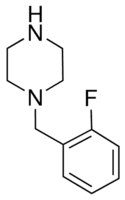
1-(2-Fluorobenzyl)piperazine
C11H15FN2
Chemical Synthesis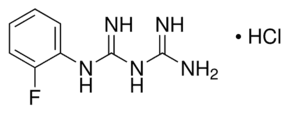
1-(2-Fluorophenyl)biguanide hydrochloride
Chemical Synthesis
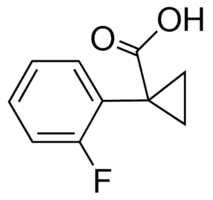
1-(2-Fluorophenyl)cyclopropanecarboxylic acid
C10H9FO2
Chemical Synthesis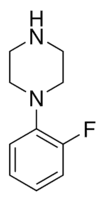
1-(2-Fluorophenyl)piperazine
C10H13FN2
Chemical Synthesis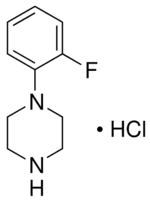
1-(2-Fluorophenyl)piperazine monohydrochloride
C10H13FN2 · HCl
Chemical Synthesis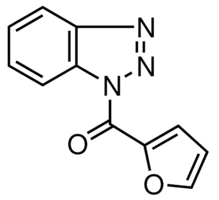
1-(2-Furoyl)-1H-benzotriazole
C11H7N3O2
Chemical Synthesis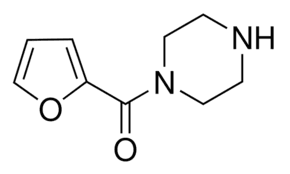
1-(2-Furoyl)piperazine
C9H12N2O2
Chemical Synthesis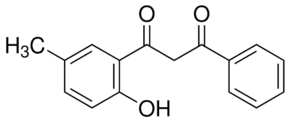
1-(2-Hydroxy-5-methylphenyl)-3-phenyl-1,3-propanedione
Chemical Synthesis
▶ Explore more

Bis(cyclopentadienyl)cobalt(III) hexafluorophosphate
C10H10CoF6P
Catalysis & Inorganic
1-(4-Chlorophenyl)biguanide hydrochloride
ClC6H4NHC(NH)NHC(NH)NH2 · HCl
Chemical Synthesis
Bis(cyclopentadienyl)dimethylzirconium(IV)
Catalysis & Inorganic

1-(4-Chlorophenyl)ethanol
ClC6H4CH(CH3)OH
Chemical Synthesis