
1-(4-Chlorophenyl)ethanol
1-(4-Chlorophenyl)ethanol (CAS 3391-10-4) is a chiral secondary benzylic alcohol with the molecular formula ClC6H4CH(CH3)OH and a molar mass of 156.61 g/mol. Supplied as a liquid of around 98% assay, it serves chiefly as an organic building block and research reagent in fine-chemical and pharmaceutical-intermediate synthesis, and as a model substrate in catalytic dehydrogenation and asymmetric reduction studies. Tech Serve Solutions supplies and exports it worldwide.
- Synonyms
- 1-(4-Chlorophenyl)ethanol4-Chloro-alpha-methylbenzyl alcoholalpha-Methyl-4-chlorobenzyl alcohol1-(4-Chlorophenyl)ethan-1-ol4-Chlorophenylmethylcarbinolp-Chloro-alpha-methylbenzenemethanolCAS 3391-10-4

Organic building block
Used as a C8 benzylic alcohol intermediate in multi-step organic synthesis, where the chloro-substituted aromatic ring and the secondary alcohol offer convenient handles for further functionalisation.
Catalysis research substrate
Employed to study transfer dehydrogenation of alcohols over heterogeneous palladium catalysts using olefins as hydrogen acceptors, making it a useful model compound in catalysis development.
Chiral synthesis and asymmetric reduction
As a secondary benzylic alcohol bearing a stereocentre, it is a reference substrate for asymmetric reduction and biocatalytic studies and a precursor to enantioenriched building blocks.
Pharmaceutical and fine-chemical intermediate
Applied as a research-scale intermediate in the preparation of more complex molecules; the corresponding ketone and downstream derivatives are of interest in fine-chemical programmes.
Laboratory reagent and reference material
Used in analytical and method-development work as a defined-purity reagent and reference standard for chromatographic and spectroscopic studies.
| Molecular weight | 156.61 |
|---|---|
| Linear formula | ClC6H4CH(CH3)OH |
| Assay | 98% |
| Boiling point | 119 °C/10 mmHg(lit.) |
| Density | 1.171 g/mL at 25 °C(lit.) |
| Refractive index | n20/D 1.541(lit.) |
| Application | 1-(4-Chlorophenyl)ethanol was used to study transfer dehydrogenation of various alcohols over heterogeneous palladium catalysts using olefins as hydrogen acceptors1. |

Hazard statements
- H302Harmful if swallowed
- H312Harmful in contact with skin
- H315Causes skin irritation
- H319Causes serious eye irritation
- H332Harmful if inhaled
- H335May cause respiratory irritation
Precautionary statements
- P261Avoid breathing dust, fume, gas or vapours
- P280Wear protective gloves, clothing and eye/face protection
- P305IF IN EYES
| Protective equipment | dust mask type N95 (US), Eyeshields, Gloves |
|---|---|
| Flash point | 113 °C / 235.4 °F |
| Water hazard class (WGK, DE) | 3 |
| Hazard codes (EU) | Xn |
| Risk statements (R) | 20/21/22-36/37/38 |
| Safety statements (S) | 26-37/39 |
Hazard information is provided for guidance. Always consult the product Safety Data Sheet (SDS), available on request, before handling.
Documentation
Every batch ships with a Certificate of Analysis covering assay, identity and purity; the grade is confirmed against your enquiry. Safety Data Sheets and technical data sheets are available on request.
Supply & logistics
Samples for technical evaluation; bulk MOQ by grade and packaging. In-stock material ships in 7–10 working days, worldwide, with full export documentation.
What is 1-(4-Chlorophenyl)ethanol used for?
+
It is used mainly as an organic building block and research reagent in fine-chemical and pharmaceutical-intermediate synthesis. It also serves as a model substrate in catalytic dehydrogenation studies and, being a chiral secondary alcohol, in asymmetric reduction and biocatalysis research.
What is the CAS number and molecular formula of 1-(4-Chlorophenyl)ethanol?
+
The CAS number is 3391-10-4 and the molecular formula is ClC6H4CH(CH3)OH, with a molecular weight of 156.61 g/mol. Its EC number is 222-223-4 and its MDL number is MFCD00041038.
What grade and purity does Tech Serve Solutions supply?
+
We supply 1-(4-Chlorophenyl)ethanol at a typical assay of 98% as a research and technical grade reagent. We do not represent it as USP, BP or EP pharmacopoeia grade. A certificate of analysis can be provided with each batch on request.
What are the safety and handling requirements for 1-(4-Chlorophenyl)ethanol?
+
It carries GHS07 with the signal word Warning and hazard statements H302, H312, H315, H319, H332 and H335: harmful if swallowed, in contact with skin or if inhaled, and causing skin, eye and respiratory irritation. Handle with gloves, eye protection and an N95-type dust mask, and consult the SDS before use.
How is 1-(4-Chlorophenyl)ethanol packed, shipped and exported?
+
It is packed in appropriately sealed laboratory and bulk containers sized to the order and labelled to GHS requirements, with full documentation. As an established exporter, Tech Serve Solutions arranges compliant international shipping and the accompanying SDS and certificate of analysis.
How do I request a sample or quote?
+
Contact Tech Serve Solutions with your required quantity, purity and destination, and our team will respond with availability, lead time and a quotation. Samples can be arranged for evaluation where appropriate.
▶ Related products
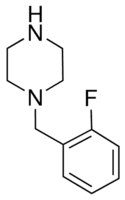
1-(2-Fluorobenzyl)piperazine
C11H15FN2
Chemical Synthesis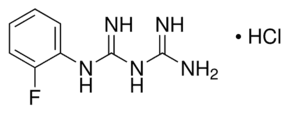
1-(2-Fluorophenyl)biguanide hydrochloride
Chemical Synthesis
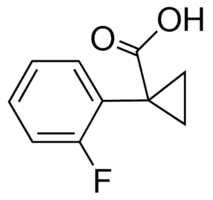
1-(2-Fluorophenyl)cyclopropanecarboxylic acid
C10H9FO2
Chemical Synthesis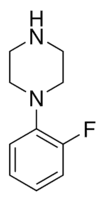
1-(2-Fluorophenyl)piperazine
C10H13FN2
Chemical Synthesis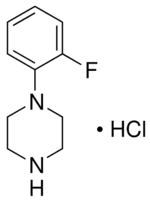
1-(2-Fluorophenyl)piperazine monohydrochloride
C10H13FN2 · HCl
Chemical Synthesis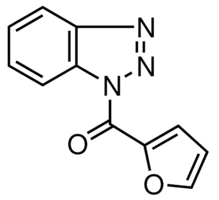
1-(2-Furoyl)-1H-benzotriazole
C11H7N3O2
Chemical Synthesis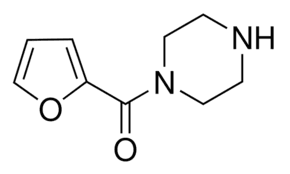
1-(2-Furoyl)piperazine
C9H12N2O2
Chemical Synthesis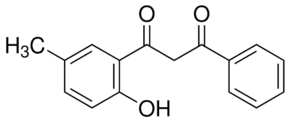
1-(2-Hydroxy-5-methylphenyl)-3-phenyl-1,3-propanedione
Chemical Synthesis
▶ Explore more

Bis(cyclopentadienyl)cobalt(III) hexafluorophosphate
C10H10CoF6P
Catalysis & Inorganic
1-(4-Chlorophenyl)biguanide hydrochloride
ClC6H4NHC(NH)NHC(NH)NH2 · HCl
Chemical Synthesis
Bis(cyclopentadienyl)dimethylzirconium(IV)
Catalysis & Inorganic
1-(4-Chlorophenyl)ethanol
ClC6H4CH(CH3)OH
Chemical Synthesis