1,4-Bis(tributylstannyl)benzene
1,4-Bis(tributylstannyl)benzene (CAS 17151-51-8) is an organotin compound utilised in chemical synthesis. It serves as a reactant in sophisticated organic transformations, including Stille cross-coupling reactions for preparing DNA base pair analogs and reactions with carbohydrate derivatives to form iodinated compounds. Its specific reactivity makes it valuable in advanced chemical research and development.
- IUPAC
- 1,4-Bis(tributylstannanyl)benzene,1,4-Phenylenebis[tributylstannane]
- Synonyms
- C30H58Sn21,4-Phenylenebis[tributylstannane]

Stille Cross-Coupling Reactions
Serves as a key reactant in Stille cross-coupling reactions for the synthesis of covalent analogs of DNA base pairs and triplets, starting from 9-benzyl-6-chloropurine.
Synthesis of Iodinated Glucose Analogs
Reacts with glucuronolactone derivatives to prepare highly iodinated analogs of D-glucose, such as 3-C-iodomethyl and 6-C-iodomethyl derivatives.
Organometallic Reagent in Synthesis
Employed as an organometallic reagent in specialised synthetic organic chemistry for creating complex molecules.
| Molecular weight | 656.20 |
|---|---|
| Empirical formula | C30H58Sn2 |
| Density | 1.147 g/mL at 25 °C |
| Refractive index | n20/D 1.522 |
| Application | Reactant for:• Preparation of covalent analogs of DNA base pairs and triplets from 9-benzyl-6-chloropurine via a Stille cross-coupling reaction1• Reaction with glucuronolactone derivatives in preparation of 3-C-iodomethyl, 6-C-iodomethyl and 6-C-iodophenyl derivatives as higher iodinated analogs of D-glucose2 |


Hazard statements
- H301Toxic if swallowed
- H312Harmful in contact with skin
- H315Causes skin irritation
- H319Causes serious eye irritation
- H372Causes damage to organs through prolonged exposure
- H410Very toxic to aquatic life with long-lasting effects
Precautionary statements
- P273Avoid release to the environment
- P280Wear protective gloves, clothing and eye/face protection
- P301IF SWALLOWED
- P305IF IN EYES
- P314Get medical attention if you feel unwell
- P501Dispose of contents and container per local regulations
| Flash point | >110 °C / >230 °F |
|---|---|
| Transport (UN / ADR) | UN 2788 6.1 / PGIII |
| Water hazard class (WGK, DE) | 3 |
| Hazard codes (EU) | T,N |
| Risk statements (R) | 21-25-36/38-48/23/25-50/53 |
| Safety statements (S) | 36/37/39-45-60-61 |
Hazard information is provided for guidance. Always consult the product Safety Data Sheet (SDS), available on request, before handling.
Documentation
Every batch ships with a Certificate of Analysis covering assay, identity and purity; the grade is confirmed against your enquiry. Safety Data Sheets and technical data sheets are available on request.
Supply & logistics
Samples for technical evaluation; bulk MOQ by grade and packaging. In-stock material ships in 7–10 working days, worldwide, with full export documentation.
What are the primary uses of 1,4-Bis(tributylstannyl)benzene?
+
1,4-Bis(tributylstannyl)benzene is used as a reactant in chemical synthesis, particularly in Stille cross-coupling reactions and for preparing iodinated carbohydrate derivatives.
What is the CAS number and formula for 1,4-Bis(tributylstannyl)benzene?
+
The CAS number is 17151-51-8, and its empirical formula (Hill notation) is C30H58Sn2, with a molecular weight of 656.20 g/mol.
What is the grade or purity of this chemical?
+
This product is supplied as a technical or research grade chemical. The assay is not specified beyond its listed specifications.
What are the main hazards associated with 1,4-Bis(tributylstannyl)benzene?
+
This compound is classified as Dangerous (GHS06, GHS08, GHS09) with a Danger signal word. It is toxic if swallowed, harmful in contact with skin, causes skin and serious eye irritation, and may cause damage to organs through prolonged or repeated exposure. It is also very toxic to aquatic life with long-lasting effects.
How is 1,4-Bis(tributylstannyl)benzene packed and shipped?
+
It is shipped under UN 2788, Hazard Class 6.1, Packing Group III, indicating it is a toxic substance. Packaging and shipping adhere to strict international regulations for hazardous materials.
How can I request a quote for 1,4-Bis(tributylstannyl)benzene?
+
To request a quote, please contact our sales team with your specific quantity requirements and delivery details. We are a global supplier and exporter.
▶ Related products
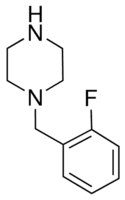
1-(2-Fluorobenzyl)piperazine
C11H15FN2
Chemical Synthesis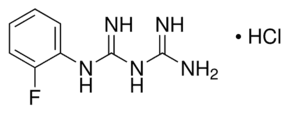
1-(2-Fluorophenyl)biguanide hydrochloride
Chemical Synthesis
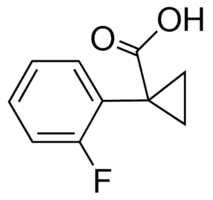
1-(2-Fluorophenyl)cyclopropanecarboxylic acid
C10H9FO2
Chemical Synthesis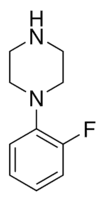
1-(2-Fluorophenyl)piperazine
C10H13FN2
Chemical Synthesis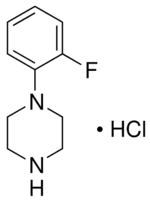
1-(2-Fluorophenyl)piperazine monohydrochloride
C10H13FN2 · HCl
Chemical Synthesis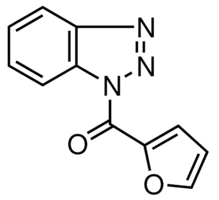
1-(2-Furoyl)-1H-benzotriazole
C11H7N3O2
Chemical Synthesis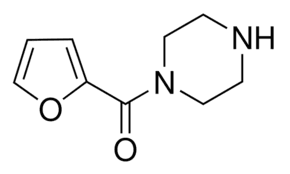
1-(2-Furoyl)piperazine
C9H12N2O2
Chemical Synthesis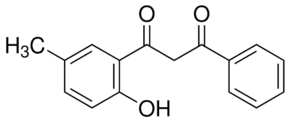
1-(2-Hydroxy-5-methylphenyl)-3-phenyl-1,3-propanedione
Chemical Synthesis