1-(4-Aminobutyl)-4-(2-methoxyphenyl)piperazine
1-(4-Aminobutyl)-4-(2-methoxyphenyl)piperazine (CAS 21103-33-3; molecular formula C15H25N3O; molar mass 263.38 g/mol) is a heterocyclic building block combining a 2-methoxyphenyl-substituted piperazine ring with a pendant primary aminobutyl chain. Supplied at ≥97.0% (HPLC), it is a difunctional intermediate used in research and chemical synthesis, where its reactive primary amine and arylpiperazine scaffold support amide coupling, reductive amination and the assembly of more complex piperazine-containing molecules.
- IUPAC
- 4-[4-(2-Methoxyphenyl)-1-piperazinyl]butylamine
- Synonyms
- 1-(4-Aminobutyl)-4-(2-methoxyphenyl)piperazine4-[4-(2-Methoxyphenyl)-1-piperazinyl]butylamine4-[4-(2-Methoxyphenyl)piperazin-1-yl]butan-1-amine4-(4-(2-Methoxyphenyl)piperazin-1-yl)butan-1-amineCAS 21103-33-3

Heterocyclic building block
Serves as a piperazine-based scaffold in multi-step organic synthesis. The 4-(2-methoxyphenyl)piperazine core is a well-established motif for constructing more elaborate nitrogen heterocycles.
Primary amine handle for derivatisation
The terminal aminobutyl group provides a reactive primary amine suitable for amide bond formation, reductive amination, sulfonylation and the introduction of further functionality onto the molecule.
Medicinal chemistry and discovery research
Arylpiperazine fragments of this type are widely used as intermediates in pharmaceutical discovery programmes. It is offered for laboratory and research use as a synthesis intermediate, not as a finished drug substance.
Reference and analytical use
The defined ≥97.0% (HPLC) assay makes it suitable as a characterised intermediate for method development and analytical comparison in synthetic laboratories.
| Molecular weight | 263.38 |
|---|---|
| Empirical formula | C15H25N3O |
| Assay | ≥97.0% (HPLC)97% |
| Storage temperature | 2-8°C |

Hazard statements
- H314Causes severe skin burns and eye damage
Precautionary statements
- P280Wear protective gloves, clothing and eye/face protection
- P305IF IN EYES
- P310Immediately call a POISON CENTER or doctor
| Transport (UN / ADR) | UN 2735PSN1 8 / PGII |
|---|---|
| Water hazard class (WGK, DE) | 3 |
| Hazard codes (EU) | C |
| Risk statements (R) | 34-52 |
| Safety statements (S) | 26-36/37/39-45 |
Hazard information is provided for guidance. Always consult the product Safety Data Sheet (SDS), available on request, before handling.
Documentation
Every batch ships with a Certificate of Analysis covering assay, identity and purity; the grade is confirmed against your enquiry. Safety Data Sheets and technical data sheets are available on request.
Supply & logistics
Samples for technical evaluation; bulk MOQ by grade and packaging. In-stock material ships in 7–10 working days, worldwide, with full export documentation.
What is 1-(4-Aminobutyl)-4-(2-methoxyphenyl)piperazine used for?
+
It is used as a heterocyclic building block and synthesis intermediate. Its reactive primary amine and 2-methoxyphenylpiperazine scaffold make it useful for amide coupling, reductive amination and the preparation of more complex piperazine-containing compounds in research and discovery chemistry.
What is the CAS number and molecular formula of 1-(4-Aminobutyl)-4-(2-methoxyphenyl)piperazine?
+
The CAS number is 21103-33-3. The empirical formula is C15H25N3O (Hill notation) with a molecular weight of 263.38 g/mol and Beilstein registry number 888383. It is also known as 4-[4-(2-methoxyphenyl)-1-piperazinyl]butylamine.
What grade and purity does Tech Serve Solutions supply?
+
Tech Serve Solutions supplies this compound with an assay of ≥97.0% (HPLC) as a research and technical-grade synthesis intermediate. We do not represent it as USP, BP or EP pharmacopoeial grade. A certificate of analysis is provided with each batch.
What are the safety and handling requirements?
+
It is classified as corrosive under GHS, signal word Danger (GHS05), with hazard statement H314 — causes severe skin burns and eye damage. Wear protective gloves, eye and face protection (P280); in case of contact, rinse thoroughly and seek immediate medical advice (P305+P351+P338, P310). It carries water hazard class WGK 3. Always consult the Safety Data Sheet before use.
How is 1-(4-Aminobutyl)-4-(2-methoxyphenyl)piperazine stored, packed, shipped and exported?
+
Recommended storage is refrigerated at 2-8°C in tightly closed containers. For transport it is regulated as a corrosive substance: UN 2735, Class 8, Packing Group II. We pack it in suitable laboratory and bulk containers and export worldwide with full documentation, including SDS and CoA, in compliance with applicable dangerous-goods regulations.
How do I request a sample or a quote?
+
Contact Tech Serve Solutions with your required quantity, purity and packing specification, and our team will respond with availability, lead time and a formal quotation. Samples can be arranged for evaluation, subject to dangerous-goods handling requirements.
▶ Related products
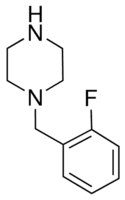
1-(2-Fluorobenzyl)piperazine
C11H15FN2
Chemical Synthesis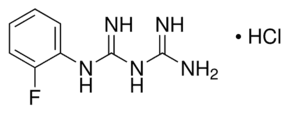
1-(2-Fluorophenyl)biguanide hydrochloride
Chemical Synthesis
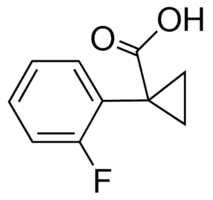
1-(2-Fluorophenyl)cyclopropanecarboxylic acid
C10H9FO2
Chemical Synthesis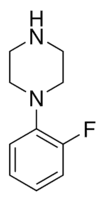
1-(2-Fluorophenyl)piperazine
C10H13FN2
Chemical Synthesis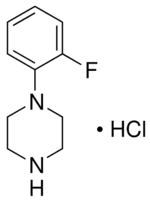
1-(2-Fluorophenyl)piperazine monohydrochloride
C10H13FN2 · HCl
Chemical Synthesis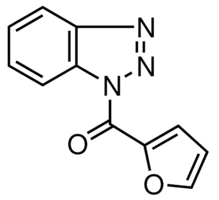
1-(2-Furoyl)-1H-benzotriazole
C11H7N3O2
Chemical Synthesis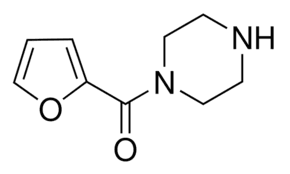
1-(2-Furoyl)piperazine
C9H12N2O2
Chemical Synthesis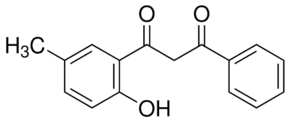
1-(2-Hydroxy-5-methylphenyl)-3-phenyl-1,3-propanedione
Chemical Synthesis