
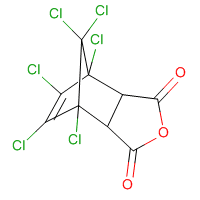
1,4,5,6,7,7-Hexachloro-5-norbornene-2,3-dicarboxylic anhydride
1,4,5,6,7,7-Hexachloro-5-norbornene-2,3-dicarboxylic anhydride (CAS: 115-27-5), with molecular formula C9H2Cl6O3, is a chlorinated alicyclic compound. It is a valuable intermediate and monomer used in the synthesis of polymers and materials requiring enhanced etch resistance and thermal stability. Its unique structure lends itself to applications in advanced materials science, particularly in microelectronics and specialised coatings.
- IUPAC
- Chlorendic anhydride
- Synonyms
- 6,7,7-Hexachloro-5-norbornene-2,3-dicarboxylic anhydrideChlorendic anhydride
Polymer Additive and Monomer
This compound serves as a monomer in the production of polymers and resins, imparting flame retardancy and improved thermal and chemical resistance. It is also utilized as a curing agent for epoxy resins, enhancing their performance characteristics for demanding applications.
Microelectronics and Lithography
Its etch-resistant properties make it suitable for use in materials science for microelectronics fabrication. It can be incorporated into photoresist formulations or other lithographic materials requiring precise pattern transfer.
Specialty Chemical Synthesis
As a dicarboxylic anhydride, it is a versatile building block in organic synthesis. It can undergo reactions to form esters, amides, and other derivatives, finding use in the development of novel materials and specialty chemicals.
| Molecular weight | 370.83 |
|---|---|
| Empirical formula | C9H2Cl6O3 |
| Assay | 97% |
| Vapour density | 13 (vs air) |
| Melting point | 235-239 °C(lit.) |

Hazard statements
- H315Causes skin irritation
- H319Causes serious eye irritation
- H335May cause respiratory irritation
Precautionary statements
- P261Avoid breathing dust, fume, gas or vapours
- P305IF IN EYES
| Protective equipment | dust mask type N95 (US), Eyeshields, Gloves |
|---|---|
| Water hazard class (WGK, DE) | 1 |
| Hazard codes (EU) | Xi |
| Risk statements (R) | 36/37/38 |
| Safety statements (S) | 25 |
Hazard information is provided for guidance. Always consult the product Safety Data Sheet (SDS), available on request, before handling.
Documentation
Every batch ships with a Certificate of Analysis covering assay, identity and purity; the grade is confirmed against your enquiry. Safety Data Sheets and technical data sheets are available on request.
Supply & logistics
Samples for technical evaluation; bulk MOQ by grade and packaging. In-stock material ships in 7–10 working days, worldwide, with full export documentation.
What is 1,4,5,6,7,7-Hexachloro-5-norbornene-2,3-dicarboxylic anhydride used for?
+
This compound is primarily used as a monomer and additive in polymers to enhance properties like etch resistance, thermal stability, and flame retardancy. It also functions as a curing agent for epoxy resins and as a building block in specialty chemical synthesis for microelectronics and materials science.
What is the CAS number and molecular formula for 1,4,5,6,7,7-Hexachloro-5-norbornene-2,3-dicarboxylic anhydride?
+
The CAS number is 115-27-5 and the molecular formula is C9H2Cl6O3.
What grade and purity does Tech Serve Solutions supply?
+
Tech Serve Solutions supplies this chemical with an assay of 97%. We do not represent this product as USP, BP, EP, or any other pharmacopoeia grade.
How should 1,4,5,6,7,7-Hexachloro-5-norbornene-2,3-dicarboxylic anhydride be handled safely?
+
This compound is classified as an irritant (H315, H319, H335). Handling requires appropriate personal protective equipment, including a dust mask (type N95 US), eyeshields, and gloves. Avoid dust formation and inhalation.
Is 1,4,5,6,7,7-Hexachloro-5-norbornene-2,3-dicarboxylic anhydride available for export?
+
Yes, Tech Serve Solutions is a specialist global supplier and exporter of fine chemicals and laboratory reagents.
How can I request a sample or quote for 1,4,5,6,7,7-Hexachloro-5-norbornene-2,3-dicarboxylic anhydride?
+
Please contact our sales team through the website or by phone to request a sample or a formal quotation.
▶ Related products
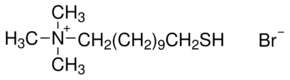
(11-Mercaptoundecyl)-N,N,N-trimethylammonium bromide
Micro / NanoElectronics

(11-Mercaptoundecyl)hexa(ethylene glycol)
C23H48O7S
Micro / NanoElectronics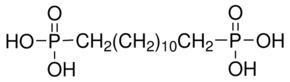
(12-Phosphonododecyl)phosphonic acid
C12H28O6P2
Micro / NanoElectronics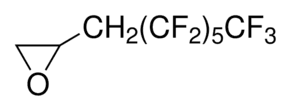
(2,2,3,3,4,4,5,5,6,6,7,7,7-Tridecafluoroheptyl)oxirane
C9H5F13O
Micro / NanoElectronics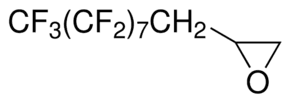
(2,2,3,3,4,4,5,5,6,6,7,7,8,8,9,9,9-Heptadecafluorononyl)oxirane
C11H5F17O
Micro / NanoElectronics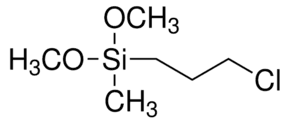
(3-Chloropropyl)dimethoxymethylsilane
Cl(CH2)3Si(OCH3)2CH3
Micro / NanoElectronics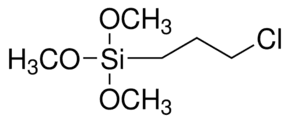
(3-Chloropropyl)trimethoxysilane
Cl(CH2)3Si(OCH3)3
Micro / NanoElectronics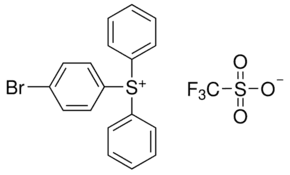
(4-Bromophenyl)diphenylsulfonium triflate
C19H14BrF3O3S2
Micro / NanoElectronics▶ Explore more

Bis(cyclopentadienyl)cobalt(III) hexafluorophosphate
C10H10CoF6P
Catalysis & Inorganic
1-(4-Chlorophenyl)biguanide hydrochloride
ClC6H4NHC(NH)NHC(NH)NH2 · HCl
Chemical Synthesis
Bis(cyclopentadienyl)dimethylzirconium(IV)
Catalysis & Inorganic

1-(4-Chlorophenyl)ethanol
ClC6H4CH(CH3)OH
Chemical Synthesis