
1,3-Dimethyl-2,6-dioxo-1,2,3,6-tetrahydropyrimidine-4-carboxylic acid
1,3-Dimethyl-2,6-dioxo-1,2,3,6-tetrahydropyrimidine-4-carboxylic acid (CAS 4116-38-5) is a heterocyclic organic compound with the molecular formula C7H8N2O4 and a molecular weight of 184.15 g/mol. It serves as a valuable building block in chemical synthesis, particularly within the realm of pyrimidine derivatives. Its structure lends itself to further functionalisation, making it a useful intermediate in the development of more complex molecules for research and development purposes.
- Synonyms
- 2,3,6-tetrahydropyrimidine-4-carboxylic acid
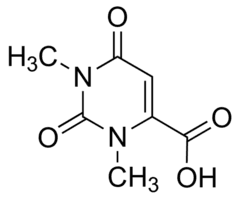
Chemical Synthesis Intermediate
This compound acts as a key intermediate in organic synthesis, facilitating the construction of larger, more complex molecular architectures. Its pyrimidine core is a common feature in many biologically active molecules.
Heterocyclic Chemistry Research
As a substituted pyrimidine, it is utilised in academic and industrial research focused on heterocyclic chemistry. Investigations may involve exploring novel reactions or developing new classes of heterocyclic compounds.
Building Block for Novel Materials
The reactive functional groups present allow for its incorporation into polymers or other advanced materials, potentially leading to new properties and applications.
| Molecular weight | 184.15 |
|---|---|
| Empirical formula | C7H8N2O4 |
Documentation
Every batch ships with a Certificate of Analysis covering assay, identity and purity; the grade is confirmed against your enquiry. Safety Data Sheets and technical data sheets are available on request.
Supply & logistics
Samples for technical evaluation; bulk MOQ by grade and packaging. In-stock material ships in 7–10 working days, worldwide, with full export documentation.
What is 1,3-Dimethyl-2,6-dioxo-1,2,3,6-tetrahydropyrimidine-4-carboxylic acid used for?
+
1,3-Dimethyl-2,6-dioxo-1,2,3,6-tetrahydropyrimidine-4-carboxylic acid is primarily used as a building block in chemical synthesis and research within heterocyclic and pyrimidine chemistry.
What is the CAS number and formula for this compound?
+
The CAS number for 1,3-Dimethyl-2,6-dioxo-1,2,3,6-tetrahydropyrimidine-4-carboxylic acid is 4116-38-5, and its molecular formula is C7H8N2O4.
What grade and purity does Tech Serve Solutions supply?
+
Tech Serve Solutions supplies this chemical for research and laboratory use. The specific purity and assay details are available on the product's Certificate of Analysis. We do not represent this product as USP, BP, or EP grade.
How is this chemical handled and what are the safety precautions?
+
Safety information will be detailed in the Safety Data Sheet (SDS) provided with the product. Users should consult the SDS for specific handling instructions and hazard information prior to use.
Can Tech Serve Solutions export this chemical?
+
Yes, Tech Serve Solutions is a global supplier and exporter of fine chemicals, pharmaceutical intermediates, and laboratory reagents, including 1,3-Dimethyl-2,6-dioxo-1,2,3,6-tetrahydropyrimidine-4-carboxylic acid.
How can I request a sample or quote?
+
To request a sample or a quote for 1,3-Dimethyl-2,6-dioxo-1,2,3,6-tetrahydropyrimidine-4-carboxylic acid, please contact our sales team through the website or directly via email or phone.
▶ Related products
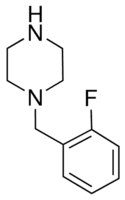
1-(2-Fluorobenzyl)piperazine
C11H15FN2
Chemical Synthesis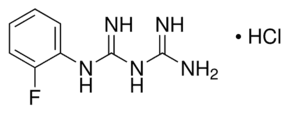
1-(2-Fluorophenyl)biguanide hydrochloride
Chemical Synthesis
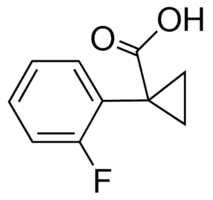
1-(2-Fluorophenyl)cyclopropanecarboxylic acid
C10H9FO2
Chemical Synthesis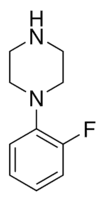
1-(2-Fluorophenyl)piperazine
C10H13FN2
Chemical Synthesis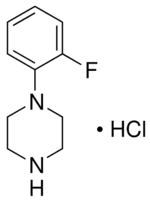
1-(2-Fluorophenyl)piperazine monohydrochloride
C10H13FN2 · HCl
Chemical Synthesis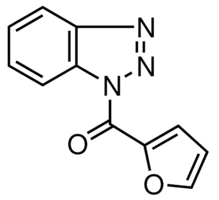
1-(2-Furoyl)-1H-benzotriazole
C11H7N3O2
Chemical Synthesis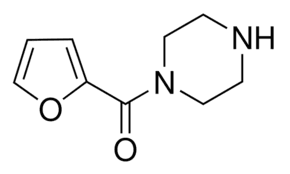
1-(2-Furoyl)piperazine
C9H12N2O2
Chemical Synthesis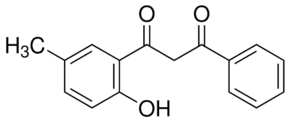
1-(2-Hydroxy-5-methylphenyl)-3-phenyl-1,3-propanedione
Chemical Synthesis
▶ Explore more

Bis(cyclopentadienyl)cobalt(III) hexafluorophosphate
C10H10CoF6P
Catalysis & Inorganic
1-(4-Chlorophenyl)biguanide hydrochloride
ClC6H4NHC(NH)NHC(NH)NH2 · HCl
Chemical Synthesis
Bis(cyclopentadienyl)dimethylzirconium(IV)
Catalysis & Inorganic

1-(4-Chlorophenyl)ethanol
ClC6H4CH(CH3)OH
Chemical Synthesis