
1,3,5-Tris(4-carboxyphenyl)benzene
1,3,5-Tris(4-carboxyphenyl)benzene (CAS 50446-44-1) is a key organic building block with the molecular formula C27H18O6. This compound serves as a crucial linker molecule in the synthesis of Metal-Organic Frameworks (MOFs). These advanced materials exhibit high surface areas and are investigated for applications in gas adsorption, separation technologies, and hydrogen storage, including the development of materials like MOF-177.
- IUPAC
- 4,4′,4′′,-Benzene-1,3,5-triyl-tris(benzoic acid),H3BTB
- Synonyms
- 50446-44-1C27H18O64,4′,4′′,-Benzene-1,3,5-triyl-tris(benzoic acid)H3BTB

Metal-Organic Framework (MOF) Synthesis
1,3,5-Tris(4-carboxyphenyl)benzene is a primary linker molecule used in constructing porous Metal-Organic Frameworks. These frameworks are formed through the coordination of metal ions or clusters with organic linkers.
Gas Adsorption and Separation
MOFs derived from this compound, such as MOF-177, possess exceptionally high surface areas, making them suitable for applications in adsorbing and separating various gases. This includes potential uses in carbon capture and storage.
Hydrogen Storage Materials
Research indicates that MOFs synthesized using 1,3,5-Tris(4-carboxyphenyl)benzene can exhibit significant hydrogen storage capacities. MOF-177, for example, has demonstrated high storage efficiency at cryogenic temperatures.
Materials Science Research
As a versatile organic building block, it is employed in advanced materials science for the creation of novel porous structures with tailored properties for diverse research applications.
| Molecular weight | 438.43 |
|---|---|
| Empirical formula | C27H18O6 |
| Assay | ≥98% |
| Impurities tested | ≤20 wt. % solvent |
| Application | 1,3,5-Tris(4-carboxyphenyl)benzene (BTB) is a building block for Metal Organic Frameworks (MOFs). MOFs are 3D-microporous materials with potential applications in gas adsorption and separation technologies.1,2,3 BTB has been recently used as a linker to make MOFs with extremely high surface area such as MOF-177 (~ 5000 m2/g), a hydrogen absorbing material with an extremely high hydrogen storage capacity of 7.5% at 77K.3 |
| Melting point | 322-327 °C |


Hazard statements
- H228Flammable solid
- H315Causes skin irritation
- H319Causes serious eye irritation
- H410Very toxic to aquatic life with long-lasting effects
Precautionary statements
- P210Keep away from heat, sparks and open flames. No smoking
- P273Avoid release to the environment
- P305IF IN EYES
- P501Dispose of contents and container per local regulations
| Protective equipment | dust mask type N95 (US), Eyeshields, Faceshields, Gloves |
|---|---|
| Transport (UN / ADR) | UN 3175 4.1 / PGII |
| Water hazard class (WGK, DE) | 3 |
| Hazard codes (EU) | Xi,N |
| Risk statements (R) | 36/38-50/53 |
| Safety statements (S) | 26-61 |
Hazard information is provided for guidance. Always consult the product Safety Data Sheet (SDS), available on request, before handling.
Documentation
Every batch ships with a Certificate of Analysis covering assay, identity and purity; the grade is confirmed against your enquiry. Safety Data Sheets and technical data sheets are available on request.
Supply & logistics
Samples for technical evaluation; bulk MOQ by grade and packaging. In-stock material ships in 7–10 working days, worldwide, with full export documentation.
What is 1,3,5-Tris(4-carboxyphenyl)benzene used for?
+
1,3,5-Tris(4-carboxyphenyl)benzene is primarily used as a linker molecule in the synthesis of Metal-Organic Frameworks (MOFs), which have applications in gas adsorption, separation, and hydrogen storage.
What is the CAS number and molecular formula for 1,3,5-Tris(4-carboxyphenyl)benzene?
+
The CAS number is 50446-44-1, and the molecular formula is C27H18O6.
What grade and purity does Tech Serve Solutions supply?
+
Tech Serve Solutions supplies 1,3,5-Tris(4-carboxyphenyl)benzene with an assay of ≥98%. This product is not represented as USP, BP, EP, or any pharmacopoeia grade.
How should 1,3,5-Tris(4-carboxyphenyl)benzene be handled safely?
+
Handling requires appropriate personal protective equipment including a dust mask (N95), eyeshields, face shields, and gloves. It is flammable, causes skin and serious eye irritation, and is very toxic to aquatic life with long-lasting effects.
How is 1,3,5-Tris(4-carboxyphenyl)benzene packed, shipped, and exported?
+
This compound is shipped as a UN 3175, Class 4.1, Packing Group II material. Specific packaging details are available upon request.
How can I request a sample or quote for 1,3,5-Tris(4-carboxyphenyl)benzene?
+
Please contact the TSS sales team via our website or your dedicated account manager to request a sample or obtain a quotation.
▶ Related products
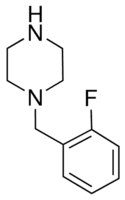
1-(2-Fluorobenzyl)piperazine
C11H15FN2
Chemical Synthesis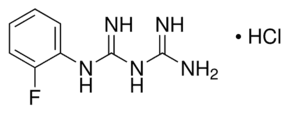
1-(2-Fluorophenyl)biguanide hydrochloride
Chemical Synthesis

1-(2-Fluorophenyl)cyclopropanecarboxylic acid
C10H9FO2
Chemical Synthesis
1-(2-Fluorophenyl)piperazine
C10H13FN2
Chemical Synthesis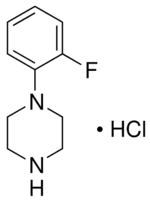
1-(2-Fluorophenyl)piperazine monohydrochloride
C10H13FN2 · HCl
Chemical Synthesis
1-(2-Furoyl)-1H-benzotriazole
C11H7N3O2
Chemical Synthesis
1-(2-Furoyl)piperazine
C9H12N2O2
Chemical Synthesis
1-(2-Hydroxy-5-methylphenyl)-3-phenyl-1,3-propanedione
Chemical Synthesis
▶ Explore more

Bis(cyclopentadienyl)cobalt(III) hexafluorophosphate
C10H10CoF6P
Catalysis & Inorganic
1-(4-Chlorophenyl)biguanide hydrochloride
ClC6H4NHC(NH)NHC(NH)NH2 · HCl
Chemical Synthesis
Bis(cyclopentadienyl)dimethylzirconium(IV)
Catalysis & Inorganic

1-(4-Chlorophenyl)ethanol
ClC6H4CH(CH3)OH
Chemical Synthesis