
1-(3,4-Dihydroisoquinolin-2(1H)-yl)propan-2-amine
1-(3,4-Dihydroisoquinolin-2(1H)-yl)propan-2-amine (CAS 54151-52-9) is an organic building block with the molecular formula C12H18N2 and a molecular weight of 190.28. It combines a tetrahydroisoquinoline ring with a propan-2-amine side chain, giving a bifunctional secondary/primary amine scaffold. Tech Serve Solutions supplies it as a research-grade heterocyclic building block for chemical synthesis and medicinal-chemistry exploration, serving laboratories seeking a reliable supplier or manufacturer of this CAS.
- Synonyms
- 1-(3,4-Dihydroisoquinolin-2(1H)-yl)propan-2-amine1-(3,4-Dihydro-1H-isoquinolin-2-yl)propan-2-amine2-(2-aminopropyl)-1,2,3,4-tetrahydroisoquinoline1-(3,4-dihydroisoquinolin-2(1H)-yl)-2-propanamineCAS 54151-52-9

Heterocyclic building block
Serves as a tetrahydroisoquinoline-based intermediate in multistep organic synthesis. The combined ring nitrogen and pendant primary amine offer convenient handles for further functionalisation.
Medicinal-chemistry research
The 1,2,3,4-tetrahydroisoquinoline core is a widely studied privileged scaffold in drug discovery. This amine is suited to exploratory analogue synthesis and structure-activity studies at research scale.
Amine functionalisation chemistry
The primary amine is a reactive site for amide coupling, reductive amination, sulfonylation and related transformations, allowing rapid diversification of the core structure.
Reference and laboratory use
Supplied as a defined small molecule for use as a synthetic intermediate and laboratory reagent in research and development settings.
| Molecular weight | 190.28 |
|---|---|
| Empirical formula | C12H18N2 |

Hazard statements
- H400Very toxic to aquatic life
Precautionary statements
- P273Avoid release to the environment
| Transport (UN / ADR) | UN 3077 9 / PGIII |
|---|---|
| Water hazard class (WGK, DE) | 3 |
| Hazard codes (EU) | N |
| Risk statements (R) | 50 |
| Safety statements (S) | 61 |
Hazard information is provided for guidance. Always consult the product Safety Data Sheet (SDS), available on request, before handling.
Documentation
Every batch ships with a Certificate of Analysis covering assay, identity and purity; the grade is confirmed against your enquiry. Safety Data Sheets and technical data sheets are available on request.
Supply & logistics
Samples for technical evaluation; bulk MOQ by grade and packaging. In-stock material ships in 7–10 working days, worldwide, with full export documentation.
What is 1-(3,4-Dihydroisoquinolin-2(1H)-yl)propan-2-amine used for?
+
It is used primarily as a heterocyclic building block and synthetic intermediate. Its tetrahydroisoquinoline ring and pendant primary amine make it a useful scaffold for chemical synthesis and medicinal-chemistry research, where it can be elaborated through reactions such as reductive amination and amide coupling.
What is the CAS number and molecular formula of 1-(3,4-Dihydroisoquinolin-2(1H)-yl)propan-2-amine?
+
Its CAS number is 54151-52-9. The molecular formula is C12H18N2 (Hill notation), corresponding to a molecular weight of 190.28.
What grade and purity does Tech Serve Solutions supply?
+
Tech Serve Solutions supplies this compound as a research/technical-grade building block for laboratory and synthesis use. We do not represent it as USP, BP or EP pharmacopoeia grade. Current assay and a certificate of analysis are provided on request with each batch, and specifications can be confirmed at the time of enquiry.
What are the safety and handling considerations for this compound?
+
Under GHS this material carries the environmental pictogram (GHS09) with the signal word Warning and hazard statement H400 (very toxic to aquatic life). It is classified as dangerous for the environment (N). Avoid release to the environment (P273), use appropriate personal protective equipment, and handle in a well-ventilated area. Always consult the Safety Data Sheet before use.
How is 1-(3,4-Dihydroisoquinolin-2(1H)-yl)propan-2-amine packed, shipped and exported?
+
It is packed in suitably sealed, labelled containers sized to the order, from gram research quantities upward. For transport it is assigned UN 3077, Class 9, Packing Group III (environmentally hazardous substance, solid, n.o.s.). We ship and export internationally with full documentation and a certificate of analysis.
Does Tech Serve Solutions provide a certificate of analysis and regulatory documents?
+
Yes. A certificate of analysis is supplied with each batch, and a Safety Data Sheet reflecting the GHS classification is available on request. Additional export and compliance documentation can be prepared to suit your destination market.
How do I request a sample or quote?
+
Contact Tech Serve Solutions with your required quantity, packaging and destination, quoting CAS 54151-52-9. We will respond with availability, lead time, documentation and a formal quotation, and can arrange a sample where appropriate.
▶ Related products
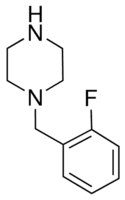
1-(2-Fluorobenzyl)piperazine
C11H15FN2
Chemical Synthesis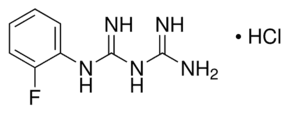
1-(2-Fluorophenyl)biguanide hydrochloride
Chemical Synthesis
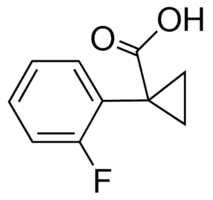
1-(2-Fluorophenyl)cyclopropanecarboxylic acid
C10H9FO2
Chemical Synthesis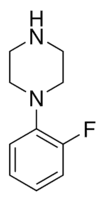
1-(2-Fluorophenyl)piperazine
C10H13FN2
Chemical Synthesis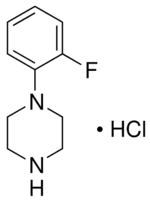
1-(2-Fluorophenyl)piperazine monohydrochloride
C10H13FN2 · HCl
Chemical Synthesis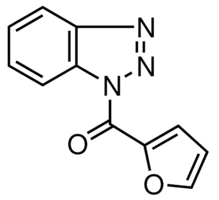
1-(2-Furoyl)-1H-benzotriazole
C11H7N3O2
Chemical Synthesis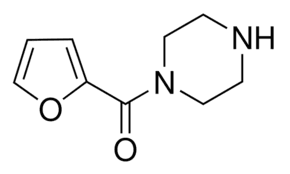
1-(2-Furoyl)piperazine
C9H12N2O2
Chemical Synthesis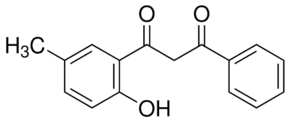
1-(2-Hydroxy-5-methylphenyl)-3-phenyl-1,3-propanedione
Chemical Synthesis
▶ Explore more

Bis(cyclopentadienyl)cobalt(III) hexafluorophosphate
C10H10CoF6P
Catalysis & Inorganic
1-(4-Chlorophenyl)biguanide hydrochloride
ClC6H4NHC(NH)NHC(NH)NH2 · HCl
Chemical Synthesis
Bis(cyclopentadienyl)dimethylzirconium(IV)
Catalysis & Inorganic

1-(4-Chlorophenyl)ethanol
ClC6H4CH(CH3)OH
Chemical Synthesis