1-(2-Tetrahydrofuroyl)piperazine hydrobromide
1-(2-Tetrahydrofuroyl)piperazine hydrobromide (CAS 63590-62-5) is a heterocyclic building block supplied as the hydrobromide salt of the piperazine amide of tetrahydrofuran-2-carboxylic acid. The free base has the formula C9H16N2O2 and a molecular weight of 184.24 g/mol; the salt is described by C9H16N2O2 · xHBr (MDL MFCD03701619). It is a crystalline solid (melting point 103-107 °C) used principally as an intermediate in organic and medicinal-chemistry synthesis, where the free piperazine nitrogen offers a convenient site for further functionalisation.
- Synonyms
- 1-(2-Tetrahydrofuroyl)piperazine hydrobromide1-(Tetrahydrofuran-2-carbonyl)piperazine hydrobromidePiperazin-1-yl(tetrahydrofuran-2-yl)methanone hydrobromide1-(Oxolane-2-carbonyl)piperazine hydrobromideTetrahydro-2-furoyl piperazine HBrCAS 63590-62-5MFCD03701619

Heterocyclic building block
Serves as a piperazine-based building block in chemical synthesis, combining a piperazine ring with a tetrahydrofuran-2-carbonyl (tetrahydrofuroyl) amide group. The secondary piperazine nitrogen provides a defined handle for alkylation, acylation, sulfonylation and related coupling steps.
Pharmaceutical and medicinal-chemistry intermediate
Piperazine amides of this type are widely used as scaffolds in medicinal-chemistry programmes and library synthesis. It is offered as a research intermediate for the construction of more complex target molecules.
Salt form for handling and storage
Supplied as the hydrobromide salt, which gives a stable, crystalline, readily weighable solid. The free base can be liberated in situ by treatment with a suitable base prior to onward reaction.
Laboratory research and development
Suitable for use in discovery chemistry, route scouting and small-scale process development where a tetrahydrofuroyl-piperazine fragment is required.
| Molecular weight | 184.24 (free base basis) |
|---|---|
| Empirical formula | C9H16N2O2 · xHBr |
| Melting point | 103-107 °C(lit.) |

Hazard statements
- H315Causes skin irritation
- H319Causes serious eye irritation
- H335May cause respiratory irritation
Precautionary statements
- P261Avoid breathing dust, fume, gas or vapours
- P305IF IN EYES
| Protective equipment | dust mask type N95 (US), Eyeshields, Gloves |
|---|---|
| Water hazard class (WGK, DE) | 3 |
| Hazard codes (EU) | Xi |
| Risk statements (R) | 36/37/38 |
| Safety statements (S) | 26-36 |
Hazard information is provided for guidance. Always consult the product Safety Data Sheet (SDS), available on request, before handling.
Documentation
Every batch ships with a Certificate of Analysis covering assay, identity and purity; the grade is confirmed against your enquiry. Safety Data Sheets and technical data sheets are available on request.
Supply & logistics
Samples for technical evaluation; bulk MOQ by grade and packaging. In-stock material ships in 7–10 working days, worldwide, with full export documentation.
What is 1-(2-Tetrahydrofuroyl)piperazine hydrobromide used for?
+
It is used principally as a heterocyclic building block and synthetic intermediate in organic and medicinal chemistry. The amide links a piperazine ring to a tetrahydrofuran-2-carbonyl group, and the free piperazine nitrogen is a convenient site for further functionalisation when building more complex molecules.
What is the CAS number and molecular formula of 1-(2-Tetrahydrofuroyl)piperazine hydrobromide?
+
The CAS number is 63590-62-5. The free base has the molecular formula C9H16N2O2 with a molecular weight of 184.24 g/mol, and the salt is represented as C9H16N2O2 · xHBr. Its MDL number is MFCD03701619.
What grade and purity does Tech Serve Solutions supply?
+
We supply this compound as a research and laboratory-grade building block. The melting point is 103-107 °C (literature). Assay specifications are confirmed per batch on the certificate of analysis; we do not represent the material as USP, BP or EP grade. Please request the current specification for your intended use.
What are the safety and handling requirements?
+
The product carries GHS07 with the signal word Warning. It is harmful by the hazard statements H315 (causes skin irritation), H319 (causes serious eye irritation) and H335 (may cause respiratory irritation). Handle with gloves, eye protection and a dust mask (type N95), avoid dust formation, and follow the precautionary advice P261 and P305+P351+P338. It is classified WGK 3 (highly hazardous to water) in Germany; consult the SDS before use.
Is 1-(2-Tetrahydrofuroyl)piperazine hydrobromide a controlled substance?
+
The supplied data does not indicate any drug-control or scheduled-substance status for this material. It is offered as a standard research chemical. Customers remain responsible for confirming the regulatory status applicable in their own jurisdiction.
How is 1-(2-Tetrahydrofuroyl)piperazine hydrobromide packed, shipped and exported?
+
It is packed as a crystalline solid in suitably labelled containers, from gram quantities to larger research volumes, with tamper-evident seals and full documentation including a certificate of analysis and safety data sheet. As a global supplier and exporter since 1998, Tech Serve Solutions arranges compliant international shipping with the required transport paperwork.
How do I request a sample or quote?
+
Contact Tech Serve Solutions with your required quantity, packaging and destination, and we will provide a quotation, current specification and sample availability. Please quote the product name and CAS 63590-62-5 to ensure an accurate response.
▶ Related products
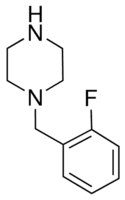
1-(2-Fluorobenzyl)piperazine
C11H15FN2
Chemical Synthesis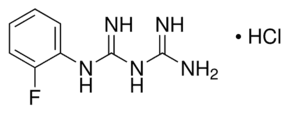
1-(2-Fluorophenyl)biguanide hydrochloride
Chemical Synthesis
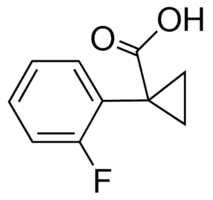
1-(2-Fluorophenyl)cyclopropanecarboxylic acid
C10H9FO2
Chemical Synthesis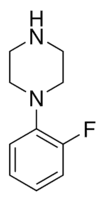
1-(2-Fluorophenyl)piperazine
C10H13FN2
Chemical Synthesis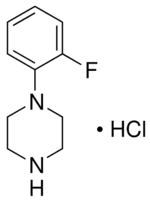
1-(2-Fluorophenyl)piperazine monohydrochloride
C10H13FN2 · HCl
Chemical Synthesis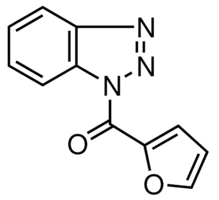
1-(2-Furoyl)-1H-benzotriazole
C11H7N3O2
Chemical Synthesis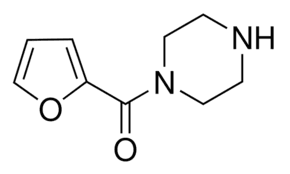
1-(2-Furoyl)piperazine
C9H12N2O2
Chemical Synthesis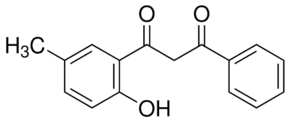
1-(2-Hydroxy-5-methylphenyl)-3-phenyl-1,3-propanedione
Chemical Synthesis