
1-(2-Morpholinoethyl)-1H-pyrazole-4-boronic acid pinacol ester
1-(2-Morpholinoethyl)-1H-pyrazole-4-boronic acid pinacol ester (CAS 864754-18-7; C15H26BN3O3; molar mass 307.20 g/mol) is a heteroaryl pinacol boronate ester used as a building block in organic synthesis. It pairs a 4-borylated pyrazole, masked as the stable pinacol (Bpin) ester, with a morpholinoethyl side chain. Tech Serve Solutions supplies it as a research-grade reagent (assay 97%) for Suzuki–Miyaura cross-coupling and medicinal-chemistry programmes worldwide.
- Synonyms
- 1-(2-Morpholinoethyl)-1H-pyrazole-4-boronic acid pinacol ester4-(2-(4-(4,4,5,5-Tetramethyl-1,3,2-dioxaborolan-2-yl)-1H-pyrazol-1-yl)ethyl)morpholine1-(2-Morpholin-4-ylethyl)-4-(4,4,5,5-tetramethyl-1,3,2-dioxaborolan-2-yl)-1H-pyrazole1-(2-Morpholinoethyl)-4-(pinacolboronate)pyrazoleCAS 864754-18-7MFCD08062342

Suzuki–Miyaura cross-coupling
Serves as the organoboron partner in palladium-catalysed Suzuki–Miyaura couplings, transferring the 1-substituted pyrazol-4-yl group to aryl or heteroaryl halides and pseudohalides to form new carbon–carbon bonds.
Pharmaceutical and agrochemical intermediate
Used in medicinal-chemistry and discovery programmes to install a morpholine-bearing pyrazole motif, a recurring scaffold in drug-like and agrochemical candidate molecules.
Heteroaryl building block for library synthesis
The stable pinacol boronate allows late-stage diversification, making the reagent suitable for parallel and library synthesis where the pyrazole-4-yl fragment is coupled onto varied cores.
Solubilising morpholine handle
The 2-morpholinoethyl substituent introduces a basic, polar side chain that can be carried through coupling to modulate solubility and physicochemical properties of the resulting molecules.
Research and laboratory reagent
Supplied for laboratory- and process-scale research as a defined organoboron reagent for method development and route-scouting in chemical synthesis.
| Molecular weight | 307.20 |
|---|---|
| Empirical formula | C15H26BN3O3 |
| Assay | 97% |
| Melting point | 89-94 °C |

Hazard statements
- H315Causes skin irritation
- H319Causes serious eye irritation
Precautionary statements
- P305IF IN EYES
| Protective equipment | dust mask type N95 (US), Eyeshields, Gloves |
|---|---|
| Water hazard class (WGK, DE) | 2 |
| Hazard codes (EU) | Xi |
| Risk statements (R) | 36-38 |
| Safety statements (S) | 26 |
Hazard information is provided for guidance. Always consult the product Safety Data Sheet (SDS), available on request, before handling.
Documentation
Every batch ships with a Certificate of Analysis covering assay, identity and purity; the grade is confirmed against your enquiry. Safety Data Sheets and technical data sheets are available on request.
Supply & logistics
Samples for technical evaluation; bulk MOQ by grade and packaging. In-stock material ships in 7–10 working days, worldwide, with full export documentation.
What is 1-(2-Morpholinoethyl)-1H-pyrazole-4-boronic acid pinacol ester used for?
+
It is primarily used as an organoboron building block in palladium-catalysed Suzuki–Miyaura cross-coupling, where the 1-(2-morpholinoethyl)pyrazol-4-yl group is joined to aryl and heteroaryl halides. This makes it valuable for assembling morpholine-substituted pyrazole scaffolds in pharmaceutical, agrochemical and general organic synthesis.
What is the CAS number and molecular formula of 1-(2-Morpholinoethyl)-1H-pyrazole-4-boronic acid pinacol ester?
+
Its CAS number is 864754-18-7 and its molecular formula is C15H26BN3O3, corresponding to a molecular weight of 307.20 g/mol. The MDL number is MFCD08062342.
What grade and purity does Tech Serve Solutions supply?
+
Tech Serve Solutions supplies this product as a research/reagent-grade material with a typical assay of 97%. It is offered for research and synthetic use; we do not represent it as a USP, BP, EP or other pharmacopoeial grade. A Certificate of Analysis can be provided with each batch.
What are the safety and handling precautions for this compound?
+
It is classified under GHS07 with the signal word Warning. The hazard statements are H315 (causes skin irritation) and H319 (causes serious eye irritation). Wear gloves and eye protection, use a dust mask (type N95) to avoid inhalation, and on eye contact follow P305+P351+P338 by rinsing cautiously with water for several minutes and removing contact lenses if present. It is assigned WGK 2 (water-hazard class) in Germany; always consult the Safety Data Sheet before use.
How is 1-(2-Morpholinoethyl)-1H-pyrazole-4-boronic acid pinacol ester packed, shipped and exported?
+
The product is packed in sealed, labelled containers sized to the order, from gram quantities to larger research and process lots, with packaging selected to protect the material in transit. Tech Serve Solutions ships and exports globally with full documentation, including a Certificate of Analysis and Safety Data Sheet, and arranges compliant transport on request.
How do I request a sample or quote?
+
Contact Tech Serve Solutions with your required quantity, packaging and destination, and our team will respond with availability, lead time and a formal quotation. Samples can be arranged for evaluation where appropriate.
▶ Related products
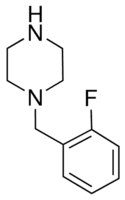
1-(2-Fluorobenzyl)piperazine
C11H15FN2
Chemical Synthesis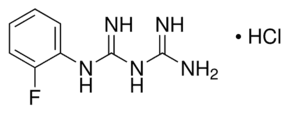
1-(2-Fluorophenyl)biguanide hydrochloride
Chemical Synthesis
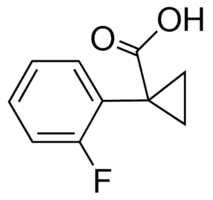
1-(2-Fluorophenyl)cyclopropanecarboxylic acid
C10H9FO2
Chemical Synthesis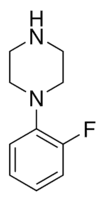
1-(2-Fluorophenyl)piperazine
C10H13FN2
Chemical Synthesis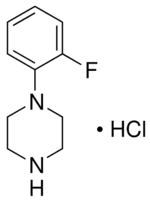
1-(2-Fluorophenyl)piperazine monohydrochloride
C10H13FN2 · HCl
Chemical Synthesis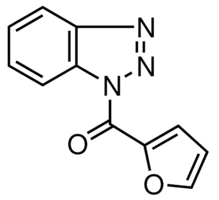
1-(2-Furoyl)-1H-benzotriazole
C11H7N3O2
Chemical Synthesis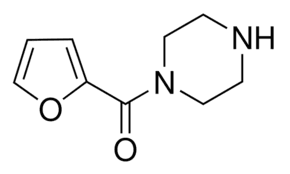
1-(2-Furoyl)piperazine
C9H12N2O2
Chemical Synthesis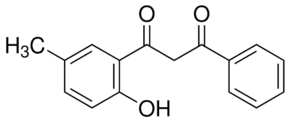
1-(2-Hydroxy-5-methylphenyl)-3-phenyl-1,3-propanedione
Chemical Synthesis
▶ Explore more

Bis(cyclopentadienyl)cobalt(III) hexafluorophosphate
C10H10CoF6P
Catalysis & Inorganic
1-(4-Chlorophenyl)biguanide hydrochloride
ClC6H4NHC(NH)NHC(NH)NH2 · HCl
Chemical Synthesis
Bis(cyclopentadienyl)dimethylzirconium(IV)
Catalysis & Inorganic

1-(4-Chlorophenyl)ethanol
ClC6H4CH(CH3)OH
Chemical Synthesis