
1-(2-Hydroxyethyl)piperazine
1-(2-Hydroxyethyl)piperazine (CAS 103-76-4) is a monosubstituted piperazine derivative bearing a 2-hydroxyethyl group on one ring nitrogen, with molecular formula C6H14N2O and a molar mass of 130.19 g/mol. Supplied as a clear liquid at 98% assay, it is a versatile heterocyclic building block valued for its secondary amine and primary hydroxyl functionality. Tech Serve Solutions supplies it worldwide for pharmaceutical, fine-chemical and research synthesis.
- IUPAC
- 2-Piperazinoethanol,Piperazine-1-ethanol
- Synonyms
- 1-(2-Hydroxyethyl)piperazine2-PiperazinoethanolPiperazine-1-ethanolN-(2-Hydroxyethyl)piperazine1-Piperazineethanol2-(1-Piperazinyl)ethanolHydroxyethylpiperazine

Pharmaceutical intermediate
The piperazine ring is a common pharmacophore, and 1-(2-hydroxyethyl)piperazine serves as a building block in the synthesis of active pharmaceutical ingredients and their intermediates. Its free secondary amine allows selective N-alkylation, acylation and coupling.
Heterocyclic building block for fine chemicals
As a bifunctional C4-to-C8 building block, it introduces a piperazine motif together with a pendant hydroxyethyl handle. The hydroxyl group can be esterified, etherified or further derivatised in multi-step organic synthesis.
Chelating and complexing agent
The ring nitrogens and hydroxyethyl oxygen give the molecule the ability to coordinate metal ions. It is used in research settings where an aminoalcohol with a piperazine framework is required.
Polymer and resin chemistry
Its difunctional amine and alcohol character allows incorporation into polymers, polyurethanes and curing systems. It is employed as a chain extender or modifier where piperazine functionality is desired.
Laboratory reagent
It is used as a reagent and reference material in analytical and synthetic laboratories, supporting method development and the preparation of further derivatives.
| Molecular weight | 130.19 |
|---|---|
| Empirical formula | C6H14N2O |
| Assay | 98% |
| Boiling point | 246 °C(lit.) |
| Density | 1.061 g/mL at 25 °C(lit.) |
| Refractive index | n20/D 1.506(lit.) |

Hazard statements
- H315Causes skin irritation
- H319Causes serious eye irritation
- H335May cause respiratory irritation
Precautionary statements
- P261Avoid breathing dust, fume, gas or vapours
- P305IF IN EYES
| Flash point | 113 °C / 235.4 °F |
|---|---|
| Water hazard class (WGK, DE) | 1 |
| Hazard codes (EU) | Xi |
| Risk statements (R) | 36/37/38 |
| Safety statements (S) | 26-36/39 |
Hazard information is provided for guidance. Always consult the product Safety Data Sheet (SDS), available on request, before handling.
Documentation
Every batch ships with a Certificate of Analysis covering assay, identity and purity; the grade is confirmed against your enquiry. Safety Data Sheets and technical data sheets are available on request.
Supply & logistics
Samples for technical evaluation; bulk MOQ by grade and packaging. In-stock material ships in 7–10 working days, worldwide, with full export documentation.
What is 1-(2-Hydroxyethyl)piperazine used for?
+
It is used principally as a heterocyclic building block and intermediate in pharmaceutical and fine-chemical synthesis, where the piperazine ring is a frequent structural motif. The combination of a free secondary amine and a hydroxyethyl group also makes it useful in polymer chemistry and as a laboratory reagent.
What is the CAS number and molecular formula of 1-(2-Hydroxyethyl)piperazine?
+
The CAS number is 103-76-4 and the molecular formula is C6H14N2O, corresponding to a molecular weight of 130.19 g/mol. Its EC number is 203-142-3 and the MDL number is MFCD00005970.
What grade and purity does Tech Serve Solutions supply?
+
Tech Serve Solutions supplies 1-(2-Hydroxyethyl)piperazine at a typical assay of 98%, as a technical/research grade product. We do not represent it as USP, BP or EP pharmacopoeial grade; a current specification and certificate of analysis can be provided on request.
What are the safety and handling precautions for 1-(2-Hydroxyethyl)piperazine?
+
It carries GHS07 with the signal word Warning and hazard statements H315 (causes skin irritation), H319 (causes serious eye irritation) and H335 (may cause respiratory irritation). Handle with suitable gloves and eye protection, avoid generating dust or mist, and use adequate ventilation (P261, P305+P351+P338). Always consult the Safety Data Sheet before use.
Is 1-(2-Hydroxyethyl)piperazine a controlled or scheduled substance?
+
The verified data for CAS 103-76-4 does not indicate any narcotics or precursor control scheduling for this product. Customers should nonetheless confirm the import requirements and any local regulations applicable in their own jurisdiction.
How is 1-(2-Hydroxyethyl)piperazine packed, shipped and exported?
+
It is supplied in securely sealed containers appropriate to the order quantity, from laboratory packs to bulk, with full labelling and documentation. Tech Serve Solutions handles export logistics and prepares the documentation required for compliant international shipment.
How do I request a sample or quote?
+
Contact Tech Serve Solutions with your required quantity, grade and destination, and we will provide a quotation along with available specifications, a certificate of analysis and the Safety Data Sheet. Samples can be arranged where appropriate.
▶ Related products
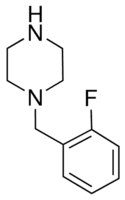
1-(2-Fluorobenzyl)piperazine
C11H15FN2
Chemical Synthesis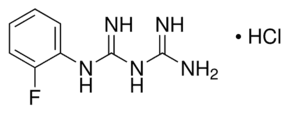
1-(2-Fluorophenyl)biguanide hydrochloride
Chemical Synthesis
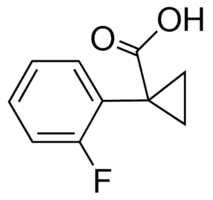
1-(2-Fluorophenyl)cyclopropanecarboxylic acid
C10H9FO2
Chemical Synthesis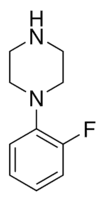
1-(2-Fluorophenyl)piperazine
C10H13FN2
Chemical Synthesis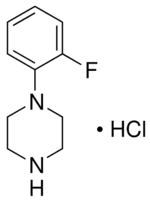
1-(2-Fluorophenyl)piperazine monohydrochloride
C10H13FN2 · HCl
Chemical Synthesis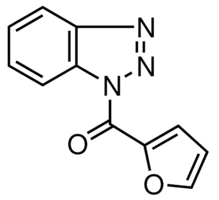
1-(2-Furoyl)-1H-benzotriazole
C11H7N3O2
Chemical Synthesis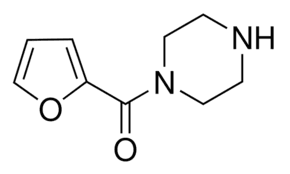
1-(2-Furoyl)piperazine
C9H12N2O2
Chemical Synthesis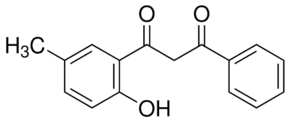
1-(2-Hydroxy-5-methylphenyl)-3-phenyl-1,3-propanedione
Chemical Synthesis
▶ Explore more

Bis(cyclopentadienyl)cobalt(III) hexafluorophosphate
C10H10CoF6P
Catalysis & Inorganic
1-(4-Chlorophenyl)biguanide hydrochloride
ClC6H4NHC(NH)NHC(NH)NH2 · HCl
Chemical Synthesis
Bis(cyclopentadienyl)dimethylzirconium(IV)
Catalysis & Inorganic

1-(4-Chlorophenyl)ethanol
ClC6H4CH(CH3)OH
Chemical Synthesis