
1-(2-Hydroxyethyl)-4-piperidone ethylene ketal
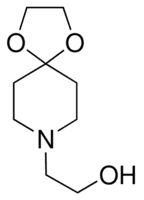
1-(2-Hydroxyethyl)-4-piperidone ethylene ketal (CAS 37443-73-5; C9H17NO3; molar mass 187.24 g/mol), also named 1,4-dioxa-8-azaspiro[4.5]decane-8-ethanol, is a heterocyclic building block in which a 4-piperidone carbonyl is masked as a cyclic ethylene ketal and the ring nitrogen carries a 2-hydroxyethyl arm. Supplied as a liquid of about 97% assay, it serves chemical synthesis as a protected piperidone scaffold for pharmaceutical intermediates and fine-chemical research. Tech Serve Solutions supplies and exports it worldwide.
- IUPAC
- 1,4-Dioxa-8-azaspiro[4.5]decane-8-ethanol,2-(4,4-Ethylenedioxypiperidino)ethenol
- Synonyms
- 1-(2-Hydroxyethyl)-4-piperidone ethylene ketal1,4-Dioxa-8-azaspiro[4.5]decane-8-ethanol2-(1,4-Dioxa-8-azaspiro[4.5]decan-8-yl)ethanol8-(2-Hydroxyethyl)-1,4-dioxa-8-azaspiro[4.5]decane4,4-Ethylenedioxy-1-(2-hydroxyethyl)piperidine2-(4,4-Ethylenedioxypiperidino)ethanolCAS 37443-73-5
Protected 4-piperidone scaffold
The ethylene ketal masks the reactive 4-keto group of the piperidine ring, allowing chemists to carry out reactions elsewhere in the molecule and later unmask the ketone under acidic hydrolysis. This makes it a convenient protected form of an N-substituted 4-piperidone.
Heterocyclic building block for synthesis
It is used as a piperidine building block in multi-step organic synthesis, providing a spirocyclic dioxolane-protected ring system for the construction of more elaborate nitrogen heterocycles.
Functionalisable hydroxyethyl handle
The pendant primary alcohol on the N-(2-hydroxyethyl) group offers a reactive site for esterification, etherification, oxidation or conversion to a leaving group, enabling onward derivatisation and linker chemistry.
Pharmaceutical intermediate research
As a substituted piperidone derivative, it is employed in medicinal-chemistry and pharmaceutical-intermediate research where a protected piperidinone core is required. Specific end-use suitability should be confirmed by the purchaser for their process.
| Molecular weight | 187.24 |
|---|---|
| Empirical formula | C9H17NO3 |
| Assay | 97% |
| Boiling point | 75-78 °C/15 mmHg |
| Density | 1.135 g/mL at 25 °C |
| Refractive index | n20/D 1.494 |

Hazard statements
- H318Causes serious eye damage
Precautionary statements
- P280Wear protective gloves, clothing and eye/face protection
- P305IF IN EYES
| Protective equipment | Eyeshields, full-face respirator (US), Gloves, multi-purpose combination respirator cartridge (US), type ABEK (EN14387) respirator filter |
|---|---|
| Flash point | >110 °C / >230 °F |
| Water hazard class (WGK, DE) | 2 |
| Hazard codes (EU) | Xi |
| Risk statements (R) | 41 |
| Safety statements (S) | 26-39 |
Hazard information is provided for guidance. Always consult the product Safety Data Sheet (SDS), available on request, before handling.
Documentation
Every batch ships with a Certificate of Analysis covering assay, identity and purity; the grade is confirmed against your enquiry. Safety Data Sheets and technical data sheets are available on request.
Supply & logistics
Samples for technical evaluation; bulk MOQ by grade and packaging. In-stock material ships in 7–10 working days, worldwide, with full export documentation.
What is 1-(2-Hydroxyethyl)-4-piperidone ethylene ketal used for?
+
It is used mainly as a heterocyclic building block in chemical synthesis. The cyclic ethylene ketal protects the 4-piperidone carbonyl while the N-(2-hydroxyethyl) arm provides a handle for further functionalisation, making it useful for preparing pharmaceutical intermediates and other fine chemicals.
What is the CAS number and molecular formula of 1-(2-Hydroxyethyl)-4-piperidone ethylene ketal?
+
Its CAS number is 37443-73-5 and its molecular formula is C9H17NO3, with a molecular weight of 187.24 g/mol. It is also known as 1,4-dioxa-8-azaspiro[4.5]decane-8-ethanol (MDL number MFCD07784370).
What grade and purity does Tech Serve Solutions supply?
+
We supply this material with an assay of approximately 97% as a research and technical grade product, typically a liquid (density about 1.135 g/mL at 25 C; refractive index n20/D 1.494). We do not represent it as USP, BP or EP pharmacopoeial grade. A specification or certificate of analysis can be provided on request.
What are the safety and handling precautions?
+
The product is classified GHS05 with the signal word Danger and hazard statement H318 (causes serious eye damage). Wear eye protection and gloves, avoid eye contact, and in case of contact with eyes rinse cautiously with water for several minutes and remove contact lenses if present (P280, P305+P351+P338). It is assigned WGK 2 in Germany. Always consult the Safety Data Sheet before use.
How is 1-(2-Hydroxyethyl)-4-piperidone ethylene ketal packed, shipped and exported?
+
It is packed in suitable sealed containers sized to the ordered quantity, with packaging, labelling and documentation prepared for safe domestic and international transport. As a specialist supplier and exporter since 1998, Tech Serve Solutions arranges export shipment with the required compliance paperwork; packing details are confirmed at the time of order.
How do I request a sample or quote?
+
Contact Tech Serve Solutions with your required quantity, purity and destination, and our team will respond with availability, lead time and documentation. Samples can be discussed subject to availability.
▶ Related products
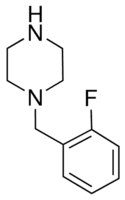
1-(2-Fluorobenzyl)piperazine
C11H15FN2
Chemical Synthesis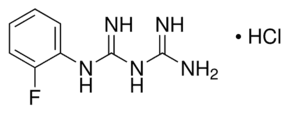
1-(2-Fluorophenyl)biguanide hydrochloride
Chemical Synthesis
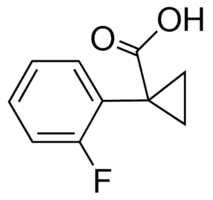
1-(2-Fluorophenyl)cyclopropanecarboxylic acid
C10H9FO2
Chemical Synthesis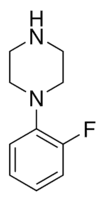
1-(2-Fluorophenyl)piperazine
C10H13FN2
Chemical Synthesis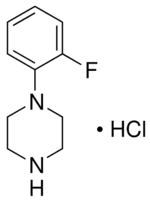
1-(2-Fluorophenyl)piperazine monohydrochloride
C10H13FN2 · HCl
Chemical Synthesis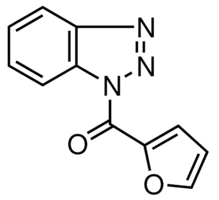
1-(2-Furoyl)-1H-benzotriazole
C11H7N3O2
Chemical Synthesis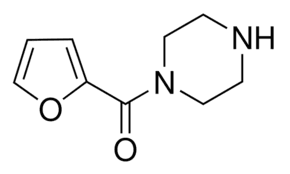
1-(2-Furoyl)piperazine
C9H12N2O2
Chemical Synthesis
1-(2-Hydroxy-5-methylphenyl)-3-phenyl-1,3-propanedione
Chemical Synthesis
▶ Explore more

Bis(cyclopentadienyl)cobalt(III) hexafluorophosphate
C10H10CoF6P
Catalysis & Inorganic
1-(4-Chlorophenyl)biguanide hydrochloride
ClC6H4NHC(NH)NHC(NH)NH2 · HCl
Chemical Synthesis
Bis(cyclopentadienyl)dimethylzirconium(IV)
Catalysis & Inorganic

1-(4-Chlorophenyl)ethanol
ClC6H4CH(CH3)OH
Chemical Synthesis