
1-(2-Fluorophenyl)piperazine
1-(2-Fluorophenyl)piperazine (CAS 1011-15-0) is a fluorinated heterocyclic building block with the molecular formula C10H13FN2 and a molar mass of 180.22 g/mol. It combines an ortho-fluorinated phenyl ring with a piperazine scaffold, giving a reactive secondary amine widely used in chemical synthesis. Tech Serve Solutions supplies it as a research-grade reagent (assay 97%), principally as an intermediate in the preparation of neurologically active compounds and other fine-chemical structures.
- Synonyms
- 1-(2-Fluorophenyl)piperazine2-Fluorophenylpiperazine1-(2-Fluorophenyl)-piperazine2-FPPortho-FluorophenylpiperazinePiperazine, 1-(2-fluorophenyl)-
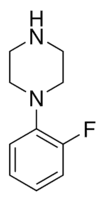
Pharmaceutical intermediate
Serves as an intermediate in the synthesis of neurologically active compounds. The free secondary nitrogen of the piperazine ring provides a convenient handle for alkylation, acylation and related coupling steps in medicinal-chemistry routes.
Fluorinated building block
The ortho-fluorine on the aromatic ring is a valued structural motif in modern drug discovery, used to fine-tune the electronic profile, metabolic behaviour and binding of candidate molecules built around an arylpiperazine core.
Heterocyclic scaffold for synthesis
As a substituted piperazine, it is employed in the construction of more elaborate heterocyclic systems and is a common scaffold in exploratory and discovery chemistry programmes.
Research and laboratory reagent
Supplied at 97% assay for use in research, method development and small-scale synthesis where a defined, consistent ortho-fluoro arylpiperazine reagent is required.
| Molecular weight | 180.22 |
|---|---|
| Empirical formula | C10H13FN2 |
| Assay | 97% |
| Boiling point | 150 °C/3 mmHg(lit.) |
| Density | 1.141 g/mL at 25 °C(lit.) |
| Refractive index | n20/D 1.556(lit.) |
| Application | An intermediate in the synthesis of neurologically active compounds.1 |

Hazard statements
- H302Harmful if swallowed
- H312Harmful in contact with skin
- H315Causes skin irritation
- H319Causes serious eye irritation
- H332Harmful if inhaled
- H335May cause respiratory irritation
Precautionary statements
- P261Avoid breathing dust, fume, gas or vapours
- P280Wear protective gloves, clothing and eye/face protection
- P305IF IN EYES
| Protective equipment | Eyeshields, Faceshields, full-face respirator (US), Gloves, multi-purpose combination respirator cartridge (US), type ABEK (EN14387) respirator filter |
|---|---|
| Flash point | 113 °C / 235.4 °F |
| Water hazard class (WGK, DE) | 3 |
| Hazard codes (EU) | Xn |
| Risk statements (R) | 20/21/22-36/37/38 |
| Safety statements (S) | 26-36 |
Hazard information is provided for guidance. Always consult the product Safety Data Sheet (SDS), available on request, before handling.
Documentation
Every batch ships with a Certificate of Analysis covering assay, identity and purity; the grade is confirmed against your enquiry. Safety Data Sheets and technical data sheets are available on request.
Supply & logistics
Samples for technical evaluation; bulk MOQ by grade and packaging. In-stock material ships in 7–10 working days, worldwide, with full export documentation.
What is 1-(2-Fluorophenyl)piperazine used for?
+
It is used mainly as a synthetic building block and pharmaceutical intermediate, in particular as an intermediate in the synthesis of neurologically active compounds. Its ortho-fluorinated aromatic ring and reactive piperazine nitrogen make it a versatile reagent for fine-chemical and medicinal-chemistry synthesis.
What is the CAS number and molecular formula of 1-(2-Fluorophenyl)piperazine?
+
The CAS number is 1011-15-0 and the molecular formula is C10H13FN2, with a molecular weight of 180.22 g/mol. Further identifiers include EC number 213-780-4 and MDL number MFCD00040726.
What grade and purity does Tech Serve Solutions supply?
+
Tech Serve Solutions supplies 1-(2-Fluorophenyl)piperazine as a research/technical-grade reagent with a typical assay of 97%. We do not represent it as USP, BP or EP pharmacopoeial grade. A certificate of analysis can be provided with each batch on request.
What are the safety and handling requirements for 1-(2-Fluorophenyl)piperazine?
+
It is classified under GHS with signal word Warning (pictogram GHS07) and hazard statements H302, H312, H315, H319, H332 and H335 — harmful if swallowed, in contact with skin or if inhaled, and causing skin, eye and respiratory irritation. Handle with gloves and eye protection, use adequate ventilation, avoid dust and aerosol formation (P261, P280, P305+P351+P338) and consult the SDS before use. It carries water-hazard class WGK 3 (Germany).
Is 1-(2-Fluorophenyl)piperazine a controlled substance?
+
The verified product data we hold does not indicate any drug-control or scheduling status for this material. Regulatory classification can vary by country, so customers should confirm the current position with their local authority before import or use.
How is 1-(2-Fluorophenyl)piperazine packed, shipped and exported?
+
It is supplied in tightly sealed, suitably labelled containers with pack sizes ranging from gram quantities to bulk, matched to your requirement. As a specialist global exporter, Tech Serve Solutions arranges compliant labelling, documentation and international freight, with each consignment accompanied by the relevant SDS and certificate of analysis.
How do I request a sample or quote?
+
Contact Tech Serve Solutions with your required quantity, purity and destination, and our team will respond with availability, lead time and a formal quotation. Samples can be arranged for qualification where appropriate.
▶ Related products
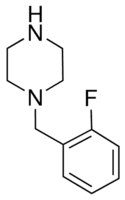
1-(2-Fluorobenzyl)piperazine
C11H15FN2
Chemical Synthesis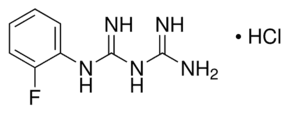
1-(2-Fluorophenyl)biguanide hydrochloride
Chemical Synthesis
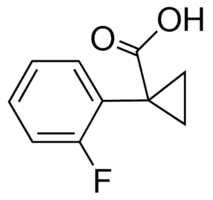
1-(2-Fluorophenyl)cyclopropanecarboxylic acid
C10H9FO2
Chemical Synthesis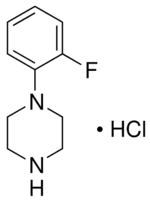
1-(2-Fluorophenyl)piperazine monohydrochloride
C10H13FN2 · HCl
Chemical Synthesis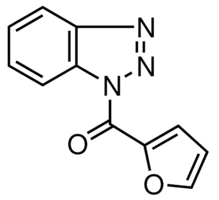
1-(2-Furoyl)-1H-benzotriazole
C11H7N3O2
Chemical Synthesis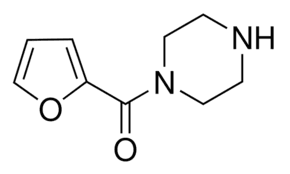
1-(2-Furoyl)piperazine
C9H12N2O2
Chemical Synthesis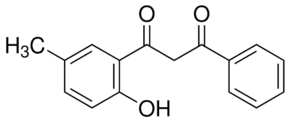
1-(2-Hydroxy-5-methylphenyl)-3-phenyl-1,3-propanedione
Chemical Synthesis
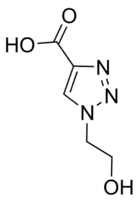
1-(2-Hydroxyethyl)-1H-1,2,3-triazole-4-carboxylic acid
Chemical Synthesis
▶ Explore more

Bis(cyclopentadienyl)cobalt(III) hexafluorophosphate
C10H10CoF6P
Catalysis & Inorganic
1-(4-Chlorophenyl)biguanide hydrochloride
ClC6H4NHC(NH)NHC(NH)NH2 · HCl
Chemical Synthesis
Bis(cyclopentadienyl)dimethylzirconium(IV)
Catalysis & Inorganic

1-(4-Chlorophenyl)ethanol
ClC6H4CH(CH3)OH
Chemical Synthesis