
1,2-Dibromopropane
1,2-Dibromopropane (CAS: 78-75-1) is a halogenated hydrocarbon with the linear formula CH3CHBrCH2Br and a molecular weight of 201.89 g/mol. This chemical serves as a valuable building block in organic synthesis and is employed in various research applications, including the study of photodissociation dynamics and reductive dechlorination processes. Its properties make it suitable for use as an internal standard in analytical chemistry.
- IUPAC
- Propylene dibromide
- Synonyms
- Propylene dibromideCH3CHBrCH2Br

Photodissociation Studies
1,2-Dibromopropane has been utilised in investigations of photodissociation dynamics at specific wavelengths (234 and 265 nm), employing techniques such as velocity map ion imaging.
Environmental Chemistry Research
It serves as a reagent in studies examining the reductive dechlorination of carbon tetrachloride, investigating the influence of reductant concentration, contact time, and suspension pH.
Analytical Chemistry Standard
1,2-Dibromopropane is used as an internal standard for the determination of nitrogenous disinfection byproducts, specifically trichloronitromethane, via gas chromatography-mass spectrometry.
Organic Synthesis Building Block
As a difunctional alkyl halide, it functions as a versatile building block in the synthesis of various organic compounds and heterocycles.
| Molecular weight | 201.89 |
|---|---|
| Linear formula | CH3CHBrCH2Br |
| Assay | 97% |
| Boiling point | 140-142 °C(lit.) |
| Density | 1.937 g/mL at 25 °C(lit.) |
| Refractive index | n20/D 1.519(lit.) |
| Solubility | organic solvents: misciblewater: slightly soluble |
| Melting point | −55 °C(lit.) |
| Application | Photodissociation dynamics of 1,2-dibromopropane at 234 and 265 nm has been investigated by using velocity map ion imaging method1. 1,2-Dibromopropane was used to study the effect of reductant concentration, reductant contact time and suspension pH on reductive dechlorination of carbon tetrachloride by soil manipulated with Fe(II) andHS-,2. It was used as internal standard during the determination of nitrogenous disinfection byproduct trichloronitromethane by gas chromatography mass spectrometry3. |


Hazard statements
- H226Flammable liquid and vapour
- H302Harmful if swallowed
- H332Harmful if inhaled
| Protective equipment | Eyeshields, Faceshields, full-face respirator (US), Gloves, multi-purpose combination respirator cartridge (US), type ABEK (EN14387) respirator filter |
|---|---|
| Flash point | 50 °C / 122 °F |
| Transport (UN / ADR) | UN 1993C 3 / PGIII |
| Water hazard class (WGK, DE) | 3 |
| Hazard codes (EU) | Xn |
| Risk statements (R) | 10-20/22 |
| Safety statements (S) | 23-24/25 |
Hazard information is provided for guidance. Always consult the product Safety Data Sheet (SDS), available on request, before handling.
Documentation
Every batch ships with a Certificate of Analysis covering assay, identity and purity; the grade is confirmed against your enquiry. Safety Data Sheets and technical data sheets are available on request.
Supply & logistics
Samples for technical evaluation; bulk MOQ by grade and packaging. In-stock material ships in 7–10 working days, worldwide, with full export documentation.
What is 1,2-Dibromopropane used for?
+
1,2-Dibromopropane is used in research for studying photodissociation dynamics, environmental remediation processes like reductive dechlorination, and as an internal standard in analytical methods such as GC-MS. It also serves as a building block in organic synthesis.
What are the CAS number and formula for 1,2-Dibromopropane?
+
The CAS number for 1,2-Dibromopropane is 78-75-1, and its linear formula is CH3CHBrCH2Br.
What grade and purity does Tech Serve Solutions supply?
+
Tech Serve Solutions typically supplies 1,2-Dibromopropane with an assay of 97%. We do not represent this product as USP, BP, or EP grade unless explicitly stated in the product specifications.
How should 1,2-Dibromopropane be handled safely?
+
1,2-Dibromopropane is flammable and harmful if swallowed or inhaled. Handle with appropriate personal protective equipment, including eyeshields, gloves, and a suitable respirator. Store in a well-ventilated area away from ignition sources.
Is 1,2-Dibromopropane a controlled substance?
+
Based on the provided data, 1,2-Dibromopropane (CAS: 78-75-1) is not indicated as a controlled or scheduled substance.
How is 1,2-Dibromopropane packed and exported?
+
1,2-Dibromopropane is packed and exported in compliance with international shipping regulations, typically as a UN 1993, Class 3, Packing Group III hazardous material.
How can I request a sample or quote for 1,2-Dibromopropane?
+
To request a sample or quote for 1,2-Dibromopropane, please contact the Tech Serve Solutions sales department via our website or direct inquiry channels.
▶ Related products
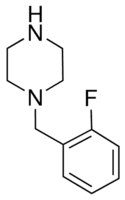
1-(2-Fluorobenzyl)piperazine
C11H15FN2
Chemical Synthesis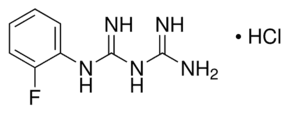
1-(2-Fluorophenyl)biguanide hydrochloride
Chemical Synthesis
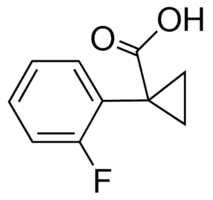
1-(2-Fluorophenyl)cyclopropanecarboxylic acid
C10H9FO2
Chemical Synthesis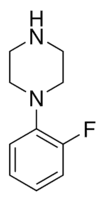
1-(2-Fluorophenyl)piperazine
C10H13FN2
Chemical Synthesis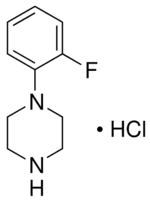
1-(2-Fluorophenyl)piperazine monohydrochloride
C10H13FN2 · HCl
Chemical Synthesis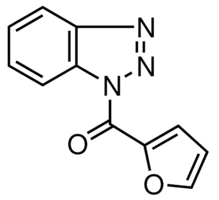
1-(2-Furoyl)-1H-benzotriazole
C11H7N3O2
Chemical Synthesis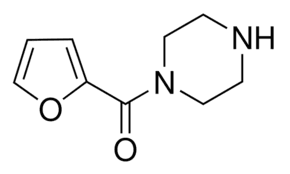
1-(2-Furoyl)piperazine
C9H12N2O2
Chemical Synthesis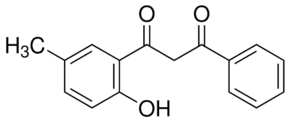
1-(2-Hydroxy-5-methylphenyl)-3-phenyl-1,3-propanedione
Chemical Synthesis
▶ Explore more

Bis(cyclopentadienyl)cobalt(III) hexafluorophosphate
C10H10CoF6P
Catalysis & Inorganic
1-(4-Chlorophenyl)biguanide hydrochloride
ClC6H4NHC(NH)NHC(NH)NH2 · HCl
Chemical Synthesis
Bis(cyclopentadienyl)dimethylzirconium(IV)
Catalysis & Inorganic

1-(4-Chlorophenyl)ethanol
ClC6H4CH(CH3)OH
Chemical Synthesis