
1,2-Bis[(2R,5R)-2,5-(dimethylphospholano]ethane(cyclooctadiene)rhodium(I) tetrafluoroborate
1,2-Bis[(2R,5R)-2,5-dimethylphospholano]ethane(cyclooctadiene)rhodium(I) tetrafluoroborate (CAS: 305818-67-1) is a rhodium(I) complex featuring chiral phospholane ligands. This compound, with a molecular weight of 556.21 g/mol and formula C22H40BF4P2Rh, is a highly efficient chiral catalyst. It is primarily utilised in asymmetric synthesis for the enantioselective preparation of various amino acid derivatives and other chiral molecules.
- Synonyms
- 1,2-Bis[(2R,5R)-2,5-dimethylphospholano]ethane(cyclooctadiene)rhodium(I) tetrafluoroborate5R)-2,5-(dimethylphospholano]ethane(cyclooctadiene)rhodium(I) tetrafluoroborate,305818-67-1, C22H40BF4P2Rh
![1,2-Bis[(2R,5R)-2,5-(dimethylphospholano]ethane(cyclooctadiene)rhodium(I) tetrafluoroborate (5R)-2) — chemical structure, CAS 305818-67-1; Chemistry, fine chemical supplied by Tech Serve Solutions](/_next/image?url=https%3A%2F%2Fpub-f4d920c906024441a773a96f7098e551.r2.dev%2Fimages%2Fproducts%2F305818-67-1.png&w=3840&q=75)
Asymmetric Hydrogenation of Amino Acid Precursors
This rhodium complex catalyses the enantioselective preparation of substituted phenylalanine via asymmetric hydrogenation of N-acetyldehydroamino acid precursors. It is also effective for the enantioselective preparation of trifluoromethyl amino acids through asymmetric hydrogenation.
Chiral Synthesis Applications
The compound serves as a valuable catalyst in asymmetric synthesis, notably for the asymmetric hydrogenation of acetamidocinnamate. Its chiral nature makes it instrumental in producing enantiomerically enriched compounds.
Privileged Ligand Catalysis
As part of the DuPhos and BPE ligand family, this rhodium complex functions as a privileged catalyst. These ligands are known for their high efficiency and broad applicability in various asymmetric transformations.
| Molecular weight | 556.21 |
|---|---|
| Empirical formula | C22H40BF4P2Rh |
| Application | DuPhos and BPE Ligands: Highly Efficient Privileged LigandsCatalyst for:• Preparation of substituted phenylalanine via asymmetric hydrogenation of N-acetyldehydroamino acid precursor1• Enantioselective preparation of trifluoromethyl amino acids via asymmetric hydrogenation2• Asymmetric hydrogenation of acetamidocinnamate3 |

Hazard statements
- H315Causes skin irritation
- H319Causes serious eye irritation
- H335May cause respiratory irritation
Precautionary statements
- P261Avoid breathing dust, fume, gas or vapours
- P305IF IN EYES
| Protective equipment | dust mask type N95 (US), Eyeshields, Gloves |
|---|---|
| Water hazard class (WGK, DE) | 3 |
| Hazard codes (EU) | Xi |
| Risk statements (R) | 36/37/38 |
| Safety statements (S) | 26 |
Hazard information is provided for guidance. Always consult the product Safety Data Sheet (SDS), available on request, before handling.
Documentation
Every batch ships with a Certificate of Analysis covering assay, identity and purity; the grade is confirmed against your enquiry. Safety Data Sheets and technical data sheets are available on request.
Supply & logistics
Samples for technical evaluation; bulk MOQ by grade and packaging. In-stock material ships in 7–10 working days, worldwide, with full export documentation.
What is 1,2-Bis[(2R,5R)-2,5-dimethylphospholano]ethane(cyclooctadiene)rhodium(I) tetrafluoroborate used for?
+
This rhodium complex is primarily used as a catalyst in asymmetric synthesis, particularly for the enantioselective hydrogenation of various substrates, including amino acid precursors.
What are the CAS number and formula for this compound?
+
The CAS number is 305818-67-1 and the empirical formula (Hill notation) is C22H40BF4P2Rh.
What grade and purity does Tech Serve Solutions supply?
+
Tech Serve Solutions supplies this chemical for research and development purposes. The specific grade and purity are detailed in the product's Certificate of Analysis. It is not supplied as USP, BP, EP, or for pharmaceutical, nutraceutical, or food use.
How should this chemical be handled safely?
+
This compound is a Warning substance (GHS07) and may cause skin irritation (H315), serious eye irritation (H319), and respiratory irritation (H335). Handle with appropriate personal protective equipment, including eyeshields, gloves, and a dust mask type N95 (US). Ensure adequate ventilation and avoid breathing dust. Store in a well-ventilated place. Keep container tightly closed. If in eyes, rinse cautiously with water for several minutes. Remove contact lenses, if present and easy to do. Continue rinsing.
Is this product controlled or scheduled?
+
This product is not identified as a controlled or scheduled substance in the provided data.
How can I request a quote or sample?
+
To request a quote or sample, please contact the Tech Serve Solutions sales department via our website or by telephone. Please reference the product name and CAS number (305818-67-1).
How is this product packed, shipped, and exported?
+
Tech Serve Solutions ensures appropriate packaging for safe transport and export in compliance with international regulations. Specific packaging details will be provided upon order confirmation.
▶ Related products
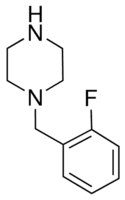
1-(2-Fluorobenzyl)piperazine
C11H15FN2
Chemical Synthesis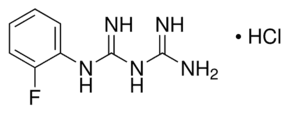
1-(2-Fluorophenyl)biguanide hydrochloride
Chemical Synthesis
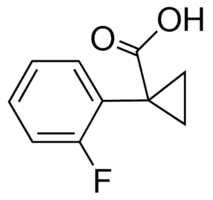
1-(2-Fluorophenyl)cyclopropanecarboxylic acid
C10H9FO2
Chemical Synthesis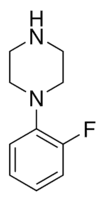
1-(2-Fluorophenyl)piperazine
C10H13FN2
Chemical Synthesis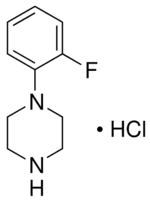
1-(2-Fluorophenyl)piperazine monohydrochloride
C10H13FN2 · HCl
Chemical Synthesis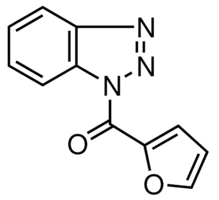
1-(2-Furoyl)-1H-benzotriazole
C11H7N3O2
Chemical Synthesis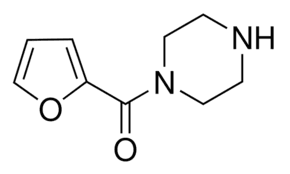
1-(2-Furoyl)piperazine
C9H12N2O2
Chemical Synthesis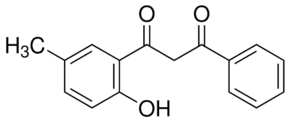
1-(2-Hydroxy-5-methylphenyl)-3-phenyl-1,3-propanedione
Chemical Synthesis
▶ Explore more

Bis(cyclopentadienyl)cobalt(III) hexafluorophosphate
C10H10CoF6P
Catalysis & Inorganic
1-(4-Chlorophenyl)biguanide hydrochloride
ClC6H4NHC(NH)NHC(NH)NH2 · HCl
Chemical Synthesis
Bis(cyclopentadienyl)dimethylzirconium(IV)
Catalysis & Inorganic

1-(4-Chlorophenyl)ethanol
ClC6H4CH(CH3)OH
Chemical Synthesis