
1,1′-Diethyl-4,4′-dicarbocyanine iodide
1,1′-Diethyl-4,4′-dicarbocyanine iodide (CAS: 18300-31-7) is a specialized cyanine dye with the molecular formula C27H27IN2 and a molecular weight of 506.42 g/mol. It exhibits strong absorption in the infrared region, with a maximum wavelength (λmax) at 814 nm. This compound is primarily utilised as an infrared dye, a laser dye, and in advanced materials science, particularly within organic electronics and photonic applications.
- Synonyms
- 18300-31-7C27H27IN2

Infrared (IR) Dye
1,1′-Diethyl-4,4′-dicarbocyanine iodide serves as a potent IR dye, absorbing strongly at 814 nm. Its properties make it suitable for applications requiring optical absorption in the near-infrared spectrum.
Laser Dye
This compound functions as a laser dye, indicating its potential use in generating or modulating laser light. Its specific absorption and emission characteristics are critical for such optical applications.
Materials Science
Within materials science, it is employed for its optical properties, contributing to the development of novel materials. This includes applications in organic and printed electronics due to its electronic and photophysical behaviour.
Photonic and Optical Materials
The compound is a valuable component in the design and fabrication of photonic and optical materials. Its spectral characteristics are essential for devices operating with light manipulation and detection.
| Molecular weight | 506.42 |
|---|---|
| Empirical formula | C27H27IN2 |
| Melting point | 158 °C (dec.)(lit.) |

Hazard statements
- H301Toxic if swallowed
- H311Toxic in contact with skin
- H315Causes skin irritation
- H319Causes serious eye irritation
- H331Toxic if inhaled
- H335May cause respiratory irritation
Precautionary statements
- P261Avoid breathing dust, fume, gas or vapours
- P280Wear protective gloves, clothing and eye/face protection
- P301IF SWALLOWED
- P305IF IN EYES
- P311Call a POISON CENTER or doctor
| Protective equipment | Eyeshields, Faceshields, Gloves, type P2 (EN 143) respirator cartridges |
|---|---|
| Transport (UN / ADR) | UN 2811 6.1 / PGII |
| Water hazard class (WGK, DE) | 3 |
| Hazard codes (EU) | T |
| Risk statements (R) | 23/24/25-36/37/38 |
| Safety statements (S) | 22-26-36/37/39-45 |
Hazard information is provided for guidance. Always consult the product Safety Data Sheet (SDS), available on request, before handling.
| Absorption | λmax 814 nm |
|---|
Documentation
Every batch ships with a Certificate of Analysis covering assay, identity and purity; the grade is confirmed against your enquiry. Safety Data Sheets and technical data sheets are available on request.
Supply & logistics
Samples for technical evaluation; bulk MOQ by grade and packaging. In-stock material ships in 7–10 working days, worldwide, with full export documentation.
What is 1,1′-Diethyl-4,4′-dicarbocyanine iodide used for?
+
1,1′-Diethyl-4,4′-dicarbocyanine iodide is used as an infrared (IR) dye, a laser dye, and in materials science, specifically for organic and printed electronics, and photonic and optical materials.
What are the CAS number and molecular formula for this compound?
+
The CAS number is 18300-31-7 and the empirical formula (Hill notation) is C27H27IN2.
What grade and purity does Tech Serve Solutions supply?
+
Tech Serve Solutions supplies this chemical for research and development purposes. The specific assay and purity are detailed in the product's Certificate of Analysis. We do not represent this product as USP, BP, EP, or any other pharmacopoeia standard unless explicitly stated in the specifications.
What are the primary safety hazards associated with 1,1′-Diethyl-4,4′-dicarbocyanine iodide?
+
This compound is classified as Dangerous (GHS06, Signal Word: Danger) and is acutely toxic if swallowed, in contact with skin, or if inhaled (H301, H311, H331). It also causes skin irritation (H315), serious eye irritation (H319), and may cause respiratory irritation (H335). Appropriate personal protective equipment, including eyeshields, faceshields, gloves, and P2 respirator cartridges, must be used.
How is 1,1′-Diethyl-4,4′-dicarbocyanine iodide packed and shipped?
+
1,1′-Diethyl-4,4′-dicarbocyanine iodide is packed and shipped according to international regulations for hazardous materials. It is classified under UN 2811, Hazard Class 6.1, Packing Group II. TSS exports globally, adhering to all relevant shipping and customs requirements.
How can I request a sample or a quote for 1,1′-Diethyl-4,4′-dicarbocyanine iodide?
+
To request a sample or obtain a quotation, please contact our sales department via the website or email. Kindly provide your contact details and the required quantity.
▶ Related products
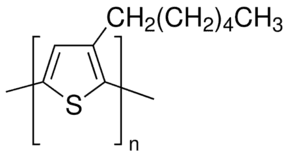
Poly(3-hexylthiophene-2,5-diyl)
Organic & Printed Electronics
![[6,6]-Phenyl C71 butyric acid methyl ester, mixture of isomers — chemical structure, CAS 609771-63-3; Organic & Printed Electronics, fine chemical supplied by Tech Serve Solutions](/_next/image?url=https%3A%2F%2Fpub-f4d920c906024441a773a96f7098e551.r2.dev%2Fimages%2Fproducts%2F609771-63-3.png&w=3840&q=75)
[6,6]-Phenyl C71 butyric acid methyl ester, mixture of isomers
Organic & Printed Electronics
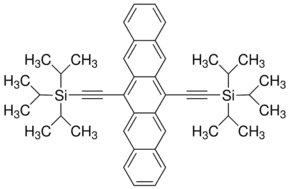
6,13-Bis(triisopropylsilylethynyl)pentacene
Organic & Printed Electronics
![[6,6]-Phenyl C61 butyric acid methyl ester — chemical structure, CAS 160848-22-6; Organic & Printed Electronics, fine chemical supplied by Tech Serve Solutions](/_next/image?url=https%3A%2F%2Fpub-f4d920c906024441a773a96f7098e551.r2.dev%2Fimages%2Fproducts%2F160848-22-6.png&w=3840&q=75)
[6,6]-Phenyl C61 butyric acid methyl ester
Organic & Printed Electronics
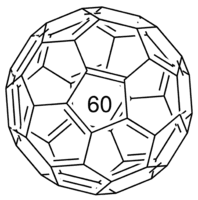
Fullerene-C60
C60
Organic & Printed Electronics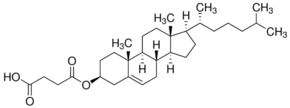
Cholesteryl hemisuccinate
C31H50O4
Organic & Printed Electronics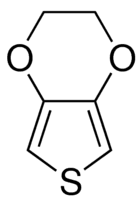
3,4-Ethylenedioxythiophene
Organic & Printed Electronics
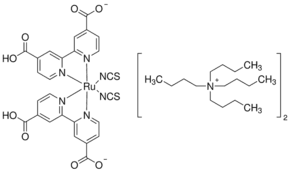
Di-tetrabutylammonium cis-bis(isothiocyanato)bis(2,2′-bipyridyl-4,4′-dicarboxylato)ruthenium(II)
Organic & Printed Electronics
▶ Explore more

Bis(cyclopentadienyl)cobalt(III) hexafluorophosphate
C10H10CoF6P
Catalysis & Inorganic
1-(4-Chlorophenyl)biguanide hydrochloride
ClC6H4NHC(NH)NHC(NH)NH2 · HCl
Chemical Synthesis
Bis(cyclopentadienyl)dimethylzirconium(IV)
Catalysis & Inorganic

1-(4-Chlorophenyl)ethanol
ClC6H4CH(CH3)OH
Chemical Synthesis