
USP vs BP vs EP: Pharmacopoeia Grades Explained
What pharmacopoeia grades actually mean, how USP, BP, EP and IP differ, and how to pick the right one for your market.
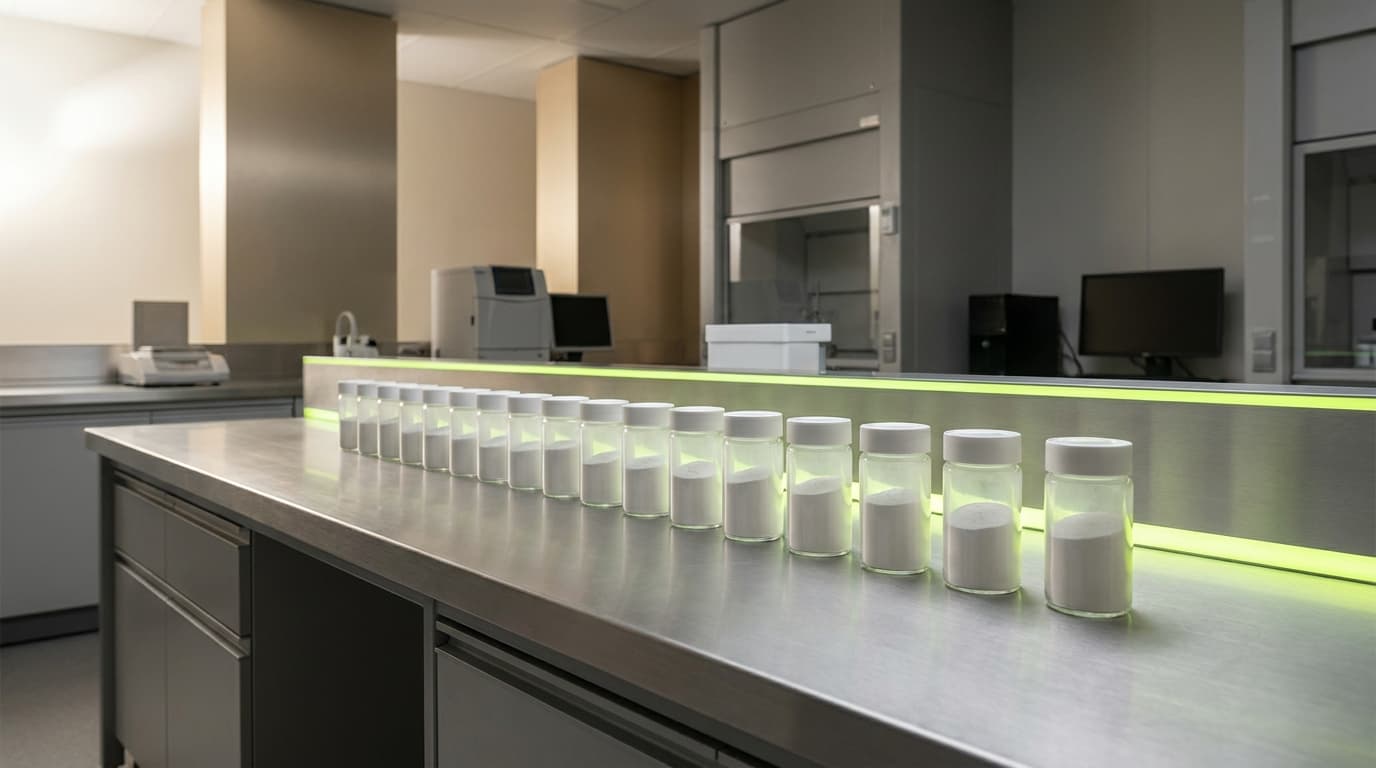
Pharmacopoeia grades — USP, BP, EP and IP — tell you which national or regional quality standard a substance has been tested against. They are not an abstract measure of "purity": each is a published monograph of identity, assay and impurity limits that a material must meet to be sold for pharmaceutical use in that market. Choosing a grade is therefore a question of where your product will be registered and sold, not which standard is "best".
What a pharmacopoeia is
A pharmacopoeia is a legally recognised collection of quality standards for medicines and their ingredients, maintained by a national or regional authority. Each substance has a monograph that specifies the tests it must pass — identification, assay (how much active is present), and limits on specific and total impurities, water content, heavy metals and residual solvents. When a Certificate of Analysis says "complies with EP", it means the batch was tested against that monograph and met every limit.
The four you'll meet most
- USP–NF — United States Pharmacopeia–National Formulary, for the United States.
- BP — British Pharmacopoeia, for the United Kingdom.
- EP (Ph. Eur.) — European Pharmacopoeia, legally binding across the EU and its member states.
- IP — Indian Pharmacopoeia, for India.
| Grade | Published by | Primary market | Notes |
|---|---|---|---|
| USP–NF | United States Pharmacopeial Convention | USA | The reference standard for US registration |
| EP (Ph. Eur.) | EDQM, Council of Europe | EU + 39 member states | Legally binding across members |
| BP | British Pharmacopoeia Commission | United Kingdom | Incorporates EP monographs by reference |
| IP | Indian Pharmacopoeia Commission | India | Required for the Indian market |
So which grade do you need?
The deciding question is your target market and registration. Selling a finished product in the United States generally means your inputs should meet USP; in the European Union, EP; in the UK, BP; in India, IP. Many manufacturers source material certified to multiple pharmacopoeias (for example "USP/BP/EP") so the same batch can supply several markets — which is the norm for widely traded actives and excipients.
If you are buying for research or analysis rather than for a registered medicine, a pharmacopoeia grade may be more than you need — see the non-pharma grades below.
Harmonisation: why the limits often match
Through the Pharmacopoeial Discussion Group (PDG) — USP, EP and the Japanese Pharmacopoeia — many monographs are harmonised, so for a large number of substances the tests and limits are identical or nearly so. This is why a single batch can legitimately carry USP, BP and EP compliance at once. Harmonisation is not universal, however: where monographs differ, the Certificate of Analysis should state results against each standard explicitly.
Beyond pharma: ACS, reagent and technical grades
Outside pharmaceutical use you will see ACS (American Chemical Society), AR / reagent, HPLC and technical grades. These are set by different bodies for different purposes — analytical reliability, not medicinal registration — and are not interchangeable with pharmacopoeia grades. Match the grade to the use: a reagent for an assay, a pharmacopoeia grade for a registered formulation.
The practical takeaway
Don't ask "which grade is purest?" — ask "which market am I supplying, and what does its pharmacopoeia require?" Then insist on a Certificate of Analysis that names the standard and shows the measured results against it.
Tech Serve Solutions supplies fine chemicals, pharmaceutical intermediates and laboratory reagents to USP, BP and EP grade with a Certificate of Analysis on every order. Browse the catalog or request a quote with your target market and grade, and we'll confirm what we can certify.
Frequently asked questions
Is EP the same as Ph. Eur.?
Yes. EP and Ph. Eur. both refer to the European Pharmacopoeia, published by the EDQM under the Council of Europe and legally binding across its member states.
Can one batch be USP, BP and EP at the same time?
Often, yes. Because many monographs are harmonised through the Pharmacopoeial Discussion Group, a single batch can meet USP, BP and EP limits simultaneously and be certified to all three.
Which grade is the 'highest quality'?
None is inherently higher — each is the standard for its market. The right grade is the one your destination market's pharmacopoeia requires for registration.
Do I need a pharmacopoeia grade for research use?
Usually not. For research or analysis, ACS, reagent (AR) or HPLC grades are typically appropriate; pharmacopoeia grades are for material going into registered medicines.
What proves a material meets a grade?
The Certificate of Analysis (CoA), which names the pharmacopoeia and lists the measured results against each monograph limit for that batch.
Sources
- United States Pharmacopeia (USP) — USP
- European Pharmacopoeia (EDQM) — EDQM, Council of Europe
- British Pharmacopoeia — BP Commission
Need the compound, not just the context?
More from Grades & Quality
Injectable Therapy Quality Standards: Advancing Primary Packaging
New industry benchmarks for elastomer components are redefining supply chain expectations for biologics and GLP-1 therapies, demanding greater data-driven rigour.
Read · 5 min→
How to Read a Certificate of Analysis (CoA)
What a CoA is, the fields that matter, and the red flags to check before you accept a chemical shipment.
Read · 2 min→